Does Dental Insurance Cover Dentures? Key Questions to Ask
Find out what can affect denture benefits, how to verify plan limits, and what to ask your insurer and dentist before you decide on treatment.

Does dental insurance cover dentures? Some plans may contribute toward complete or partial dentures, but benefits vary by policy and may not cover the full cost. Ask your insurer about the specific appliance and related services being proposed, then compare its written response with the treatment estimate from your dental office.
Call to discuss your denture questions
How does dental insurance coverage for dentures work?
A dental plan is a contract with its own definitions, exclusions, payment rules, and benefit limits. One policy may include a benefit for a denture, while another may restrict when it pays or how often an appliance can be replaced. Even if a plan describes dentures as a covered service, that does not mean it will pay the entire office fee or that every part of treatment qualifies.
The amount you may owe can depend on several details at once: whether the proposed care is eligible, the plan’s deductible and annual maximum, the insurer’s allowed fee, any coinsurance or copayment, and whether network rules apply. Your remaining benefits may also be affected by other dental services already processed during the benefit year. A percentage printed in a benefit summary cannot answer all of these questions by itself.
Coverage is determined under the terms of your policy. A dental office can provide treatment information and help request a benefits review, but the insurer processes the claim according to your plan. A pre-treatment estimate can help you plan, yet it is not necessarily a guarantee of final payment. Ask what could change between the estimate and the processed claim.
Which parts of denture treatment should you verify?
People often use “dentures” to mean the removable appliance, but a proposed course of care may include several separate services. Insurance may evaluate each one under a different rule. Get an itemized treatment plan so that you and the insurer are discussing the same proposed care.
- Appliance type: Is the recommendation for a complete denture, a partial denture, or an implant-supported option? Confirm the exact description the office will submit.
- Examination and records: Ask whether the exam, imaging, impressions, or scans are listed separately and whether your plan treats them differently from the appliance.
- Preparatory treatment: If extractions or other care are being considered, ask the insurer to review those items individually rather than assume that an appliance benefit includes them.
- Delivery and follow-up: Clarify how adjustments, relines, repairs, and follow-up visits are described and whether separate limits apply.
- Timing: Ask whether a waiting period, replacement interval, or other time-related provision applies to your current plan and proposed treatment.
- Eligibility details: Ask whether the answer depends on plan enrollment dates, prior treatment, a missing-tooth provision, or another policy term.
These are items to check, not assumptions about your benefits. For a plain-language overview of the differences among removable appliances, see Bain Dental’s guide to denture types, fitting, and care. Your dentist can explain which options may be appropriate after evaluating your needs.
Which plan limits can change your share?
Before you rely on an estimate, ask how the insurer will apply the contract to your particular plan. The same proposed service can produce different estimates for two people because their plan terms, benefit use, and network arrangements may differ.
Annual maximum and benefits already used
An annual maximum is the cap on what a plan pays during a defined benefit period. It is not necessarily the maximum amount of treatment that can be performed. If benefits have already been paid for other services during that period, the amount still available may be lower. Ask the insurer for the remaining benefit and the date on which its benefit period resets. Confirm whether its estimate accounts for claims that are pending as well as those already paid.
Deductible, coinsurance, and allowed fee
A deductible is an amount you may need to pay before plan payments apply to services covered by that deductible. Coinsurance or a copayment describes the part assigned to you under plan rules. The insurer may calculate its payment using an allowed fee, which may not match the dental office’s stated fee. Ask the representative to explain each amount in the estimate and whether the figures are based on in-network care.
For example, imagine a written estimate shows an office fee, a plan allowance, an estimated insurer payment, and a projected patient portion. Do not read the insurer’s estimated contribution as a promise to pay that amount. Instead, check that the office fee and service description match your treatment plan, ask whether your deductible and remaining maximum were included, and find out whether the estimate assumes the office is in network. This process helps identify what the calculation includes without guessing at a final bill.
Waiting periods and replacement frequency
Some policies include waiting periods for certain benefits or restrict payment for a replacement appliance within a specified timeframe. The applicable rule may depend on the date a previous denture was placed or another term in the policy. If you are replacing an appliance, tell the insurer when the prior one was made and ask it to identify the exact provision it is applying. Do not assume that a replacement is covered simply because the original appliance was covered.
Network and coordination rules
If your policy uses a provider network, ask whether the office is in network and how that status affects the estimated payment and your responsibility. If you have coverage through more than one plan, disclose that to both the insurer and the dental office. Ask which plan will process the claim first and whether coordination of benefits changes the estimate. Do not assume that two plans will each pay a full share.
How can you check your denture benefits before treatment?
A step-by-step check can reduce confusion and make it easier to compare what the dentist proposes with what your insurer says. Keep the documents together so the service descriptions, dates, and assumptions are visible.
- Find the current policy documents. Look for sections on dentures or prosthodontic services, exclusions, replacement intervals, waiting periods, deductibles, annual maximums, and network rules. Benefit summaries can be useful, but consult the policy language if a summary is unclear.
- Request an itemized plan from the dental office. Ask for the proposed appliance and related care to be listed separately. If procedure descriptions or codes are available, use the exact ones provided by the office when speaking with the insurer. Do not try to select codes yourself.
- Call the number on your insurance card. Give the representative the member information and the specific proposed services. Ask whether each item is eligible under your policy, what limits or exclusions apply, and how much of the annual maximum remains.
- Ask for a pre-treatment estimate. Find out whether the insurer can review the proposed treatment before it begins, what documents it needs, and how long review may take. Ask whether the estimate is subject to eligibility, plan changes, or claim review.
- Check the provider and date assumptions. Confirm that the estimate names the right provider or network status and applies to the planned treatment date. Verify whether the plan will be active and whether its benefit period may change before services are completed.
- Compare the response with the office estimate. Review every line, including the service description, office fee, allowed fee, estimated plan payment, deductible, and projected patient portion. Ask about any missing line or mismatch before making a financial decision.
- Keep a record. Note the date of the call, the representative’s name or reference number, and what was explained. Save the policy section, written estimate, and office treatment plan so you can refer to the same information if you need to follow up.
If the insurer gives a verbal answer, ask whether it can send its explanation in writing. If the explanation is unclear, ask the representative to point to the relevant policy provision or transfer you to someone who can explain it. For general insurance consumer information in Georgia, the Georgia Office of Commissioner of Insurance and Safety Fire’s official website is a state resource. Your plan documents and insurer remain the places to confirm the terms of your own dental benefits.
What questions should you ask the insurer?
Using precise questions can help keep the conversation focused on your plan rather than a general answer about dentures. Have your member ID and itemized treatment plan available, and write down the answers.
- Does my current plan provide benefits for the specific complete or partial denture being proposed?
- Are the exam, imaging, extractions, appliance, adjustments, relines, and repairs assessed separately?
- Is there a waiting period, exclusion, replacement-frequency limit, or other restriction relevant to this treatment?
- What deductible applies, how much of it has been met, and how much of my annual maximum remains?
- What fee or allowance will the plan use, and is the estimate based on in-network care?
- Does the insurer need records or additional information from the dental office before reviewing the estimate?
- Is the estimate for the dates and services listed on the treatment plan, and what could cause the final payment to differ?
- Can you provide the answer in writing or give me a call reference number and the policy language that applies?
If a representative says a service is “covered,” follow up by asking what that means in dollars and under which conditions. Ask whether the plan considers the service eligible but still applies a deductible, maximum, allowed fee, waiting period, or replacement rule. That follow-up distinguishes eligibility from the amount the plan may ultimately pay.
How should you read and compare treatment estimates?
Start by separating the clinical decision from the financial calculation. Ask the dentist to explain why the proposed appliance and related services are being considered, what alternatives may be appropriate, and what the treatment steps involve. Then examine the estimate line by line. If two estimates appear different, first check whether they describe the same appliance, services, provider arrangement, and timing.
For a useful comparison, write down the following for each estimate: the service included, the office fee, the insurer’s estimated allowance and payment, the deductible or other patient share, the annual maximum assumed, and any items not included. Also record whether the estimate is preliminary and what information could change it. This simple list can reveal that a lower projected total leaves out a separate service or relies on an assumption that does not apply to you.
Ask the office to explain whether an item is part of the recommended treatment, optional, or dependent on what is found during care. Do not compare totals if the treatment plans are not clinically comparable. If you are considering removable and implant-supported solutions, Bain Dental’s overview of the pros and cons of dental implants and dentures can help you prepare questions about the options. It does not replace an exam or determine which option is right for an individual.
What if your plan does not pay the full amount?
If the estimate leaves a balance, ask the dental office to explain when payment would be due and which parts of the total are firm or still subject to insurer review. Ask whether there are payment arrangements or financing options, and request their current written terms, eligibility requirements, fees, and repayment schedule before deciding. Compare any financing obligation with your budget and do not assume that approval or particular terms are available.
Bain Dental lists an in-house dental savings plan. Ask the office whether the plan is relevant to your situation and what its current terms include. A savings plan is not the same as dental insurance. Confirm eligibility and the services or discounts that apply directly with the practice rather than treating it as a guarantee that a particular denture service will cost less.
You can also ask the dentist whether the treatment sequence can be staged, if that is clinically appropriate. A change in timing may interact with benefit-year limits or a plan’s rules, so ask the insurer how the dates affect coverage before scheduling around a reset. Do not delay an evaluation or change recommended care solely to try to use benefits; ask the dentist to explain any health considerations and the consequences of waiting in your specific case.
How should denture options fit into the insurance discussion?
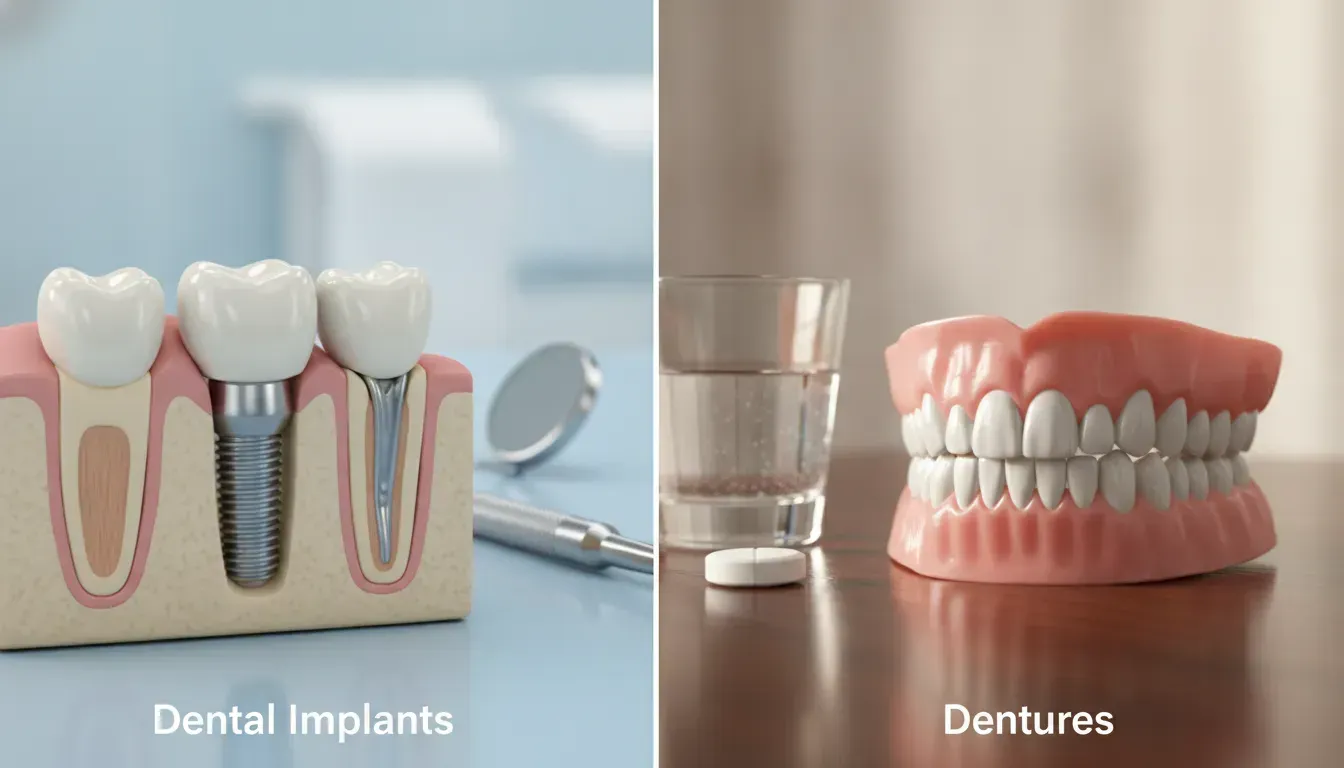
A complete denture replaces all teeth in an arch, while a partial denture replaces some missing teeth and is used when some natural teeth remain. Implant-supported dentures involve a different treatment approach and may include additional procedures. These options can differ in design, care, clinical requirements, and the services listed on an estimate. Insurance coverage alone does not establish which option is appropriate.
Ask your dentist to discuss the choices that may fit your oral health, goals, and circumstances. For each option, ask what the planned steps are, which services are separate, what follow-up may be involved, and which parts of the plan are known versus dependent on examination findings. Then send the same itemized descriptions to the insurer. This makes the benefits inquiry more useful and helps avoid comparing a denture-only estimate with a broader treatment plan.
Bain Dental’s dental services overview is a starting point for learning about care listed by the practice. The insurer can explain policy benefits; the dentist can evaluate your mouth and discuss clinical options. Keep those roles distinct as you make a decision.
What can you do if the insurer says a service is not covered?
First, clarify whether the response means the service is excluded, the plan’s requirements have not been met, or the information provided was not enough to decide. These are different situations and may call for different next steps. Ask the representative to identify the policy language behind the response and whether the decision is based on the appliance type, the service description, a replacement interval, a waiting period, or another plan rule.
Check that the insurer reviewed the same treatment plan you received from the office. A missing record, an incorrect date, or a mismatch in the service description can affect a benefits inquiry. If the representative needs more information, ask what is required, who should send it, and whether the insurer can reconsider the estimate once it receives the material. Keep copies of what is submitted and note the date.
If you receive a formal claim denial after treatment, read the explanation of benefits and the appeal instructions carefully. The document should help you understand the reason given and any deadline or process for asking the insurer to review its decision. Contact the insurer using the instructions on the notice, and ask the dental office for relevant treatment documentation if needed. Do not assume that a preliminary estimate and a final claim decision use the same information or have the same review process.
How can you organize the decision before scheduling?
A brief comparison sheet can help you make the next conversation more productive. Put the dentist’s proposed option at the top, then list its separate services, the insurer’s written response for each one, the estimated office fee and plan allowance, the deductible and remaining maximum, and any unclear policy provision. Add a column for follow-up questions and mark who will answer each one. This prevents a broad statement such as “the denture is covered” from obscuring a limit that matters to your estimate.
For example, suppose your plan response includes an appliance but says nothing about a proposed adjustment or extraction. Leave those lines marked unresolved rather than assuming they are included or excluded. Ask the office whether those items are planned and have the insurer assess them separately. If the response depends on a replacement date, confirm the date the insurer has on file. Once the details are clarified, review the complete estimate with the dental office and ask what financial responsibility remains uncertain.
Before scheduling, you should be able to explain in your own words which services are proposed, what the insurer estimates it may pay, what amount is your projected share, and which conditions could change that estimate. If any of those points remain unclear, pause to ask for an explanation rather than trying to infer the answer from a benefit percentage or a single total. The goal is not to predict a final claim with certainty; it is to make the assumptions and open questions visible before you decide.
Frequently asked questions about denture insurance
Does dental insurance cover dentures for adults?
Some policies may provide benefits for dentures, but the answer depends on the individual plan and its limits. Ask about the exact appliance, related services, deductible, annual maximum, waiting period, and any replacement rule that applies to you.
Will insurance pay for a replacement denture?
Possibly, depending on the policy’s eligibility and replacement provisions. Tell the insurer when the prior appliance was made and ask whether that date affects the proposed replacement. Request the relevant rule in writing when possible.
Are adjustments, relines, or repairs included?
They may be treated separately from the initial appliance, and plan rules can differ. Ask the insurer to review each proposed service individually, including any time-based limits or conditions.
Is a pre-treatment estimate a promise of payment?
Not necessarily. It is an estimate based on information available at the time. Final payment is determined when the insurer reviews the claim under the policy, so ask what assumptions or later changes could affect the amount.
Who decides which type of denture is appropriate?
A dentist can examine your mouth and discuss possible treatment options. The insurer can explain benefits under your policy, but its coverage response does not decide what treatment is appropriate for your health.
Contact Bain Dental to discuss next steps
Before moving forward, confirm the treatment plan with your dentist and the benefit details with your insurer so you can make an informed decision.