Dental Implants vs Dentures: Which Is Right for You?
Compare dental implants vs dentures to find the best tooth replacement for your needs, comfort, budget, and long-term oral health.
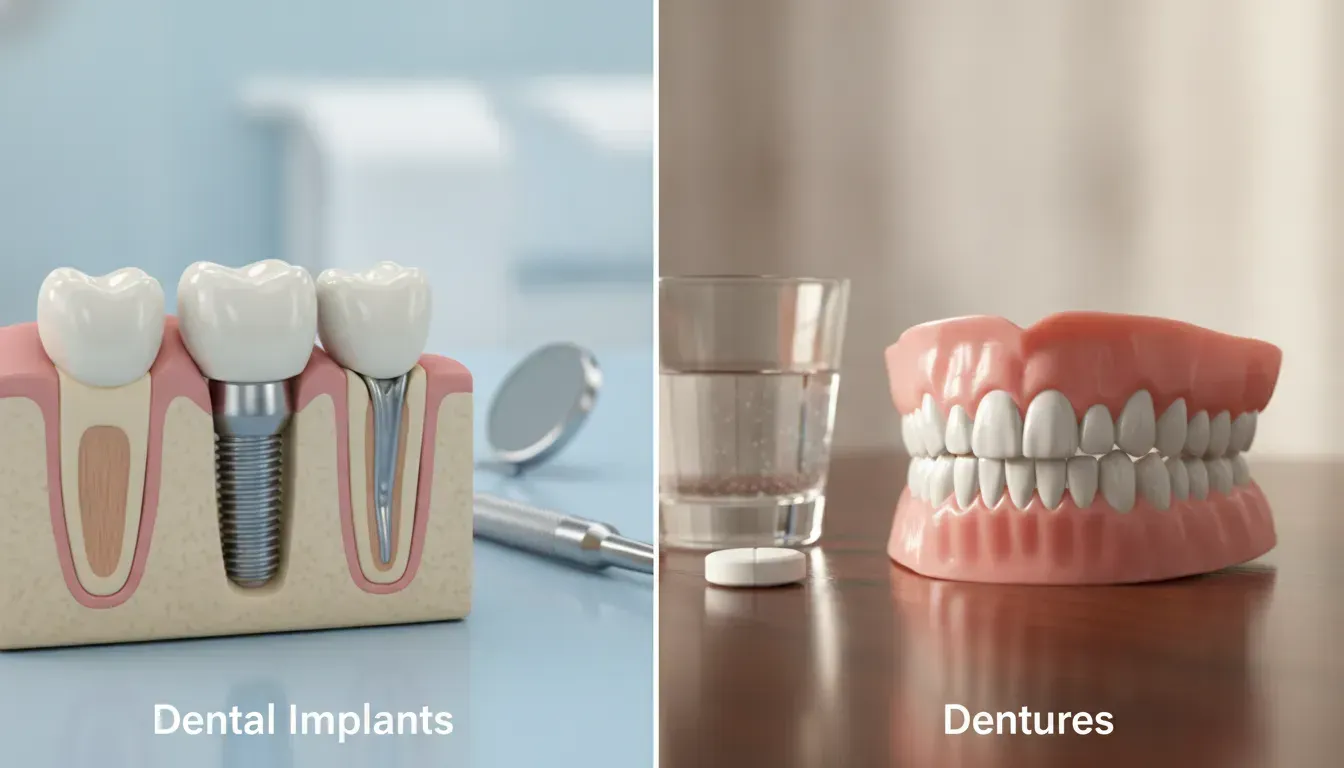
Tooth loss can make everyday tasks feel unfamiliar. You may avoid certain foods, worry about dentures shifting, or wonder whether implants are worth the additional treatment time. Comparing dental implants vs dentures can help you understand what each option involves before you make a decision. Implants attach to the jawbone and support a crown, bridge, or denture. Traditional dentures rest on the gums and can be removed. Neither choice is right for every patient. An exam, dental imaging, and a review of your goals can help determine whether you need conventional dentures, implant-supported dentures, or a full-mouth implant solution.
Key Takeaways
- Implants and dentures offer different benefits: Implants provide fixed support, while conventional dentures are removable. Implant-supported dentures combine removable teeth with added stability.
- Candidacy depends on more than missing teeth: Your dentist will assess your gums, jawbone, remaining teeth, medical history, healing ability, and personal goals before recommending treatment.
- Compare the complete treatment plan: Review costs, healing time, maintenance, future adjustments, insurance coverage, Bain Dental’s savings plan, and financing options during your consultation.
Dental Implants vs. Dentures: What Are They?
Dental implants and dentures both replace missing teeth, but they support your smile in different ways. Implants are anchored in the jawbone, while dentures rest on the gums and can be removed. Your ideal choice may depend on the number of teeth you have lost, the condition of your gums and jawbone, your overall health, and how you want your replacement teeth to feel and function.
Some patients need to replace one tooth, while others need a solution for several missing teeth or an entire dental arch. You may also have more than one option. For example, implant-supported dentures combine removable teeth with the added stability of dental implants.
A dental exam and imaging allow your provider to assess your oral health and discuss realistic treatment choices. Bain Dental & Aesthetics Group offers comprehensive dental services, including dentures and full-mouth implant treatment. Understanding how each option works can help you prepare for a productive consultation.
Fixed vs. removable tooth replacement
Dental implants are fixed tooth replacements. A titanium post is placed in the jawbone and supports a crown, bridge, or denture. Once treatment is complete, the restoration remains in place during normal activities. You clean it regularly, just as you care for natural teeth, although your dentist may recommend special brushes or flossing tools.
Dentures are removable appliances that replace some or all missing teeth. Full dentures replace every tooth in an upper or lower arch. Partial dentures replace several missing teeth and fit around the natural teeth that remain. You remove dentures for cleaning and typically take them out while sleeping.
Implants may provide more stability, while dentures can be a practical choice for patients who prefer a removable treatment or are not candidates for implant surgery. Bone loss, gum health, medical conditions, and personal preferences all matter. Aspen Dental outlines the main differences between dentures and implants.
Implant posts, abutments, and restorations
A dental implant restoration usually includes three parts. The first is the implant post, which is placed in the jawbone and acts as an artificial tooth root. The second is the abutment, a connector that attaches to the post. The third is the restoration, or visible replacement tooth.
A crown can replace one missing tooth. A bridge can replace several adjacent teeth, with implants providing support at selected locations. An implant-supported denture can replace most or all teeth in an arch. Your provider will select the restoration based on the number of missing teeth, your bite, your bone health, and your treatment goals.
Implant treatment may happen in stages. Your provider may place the post first, allow time for healing, and attach the abutment and final restoration later. Temporary teeth may be available during healing, depending on your treatment plan.
How implants fuse with the jawbone
After an implant post is placed, the jawbone gradually grows around its surface. This process is called osseointegration. It usually takes several months and creates a stable foundation for the final crown, bridge, or denture. Healing time varies according to your bone quality, the number of implants, and whether you need procedures such as bone grafting.
Your dental team will give you instructions for protecting the surgical site. These may include eating soft foods, avoiding pressure on the area, and following specific cleaning steps. Share your full medical history, medications, and tobacco use with your provider, since these factors can affect healing.
An implant still needs regular care after it integrates with the bone. The gum tissue around it can become inflamed, and the surrounding bone can be affected by poor oral hygiene. Brushing, cleaning between teeth, professional visits, and routine exams help protect the implant and your remaining natural teeth. Penn Dental Medicine explains how implants replace tooth roots and support restorations.
Single, multiple, and full-mouth implants
A single dental implant can replace one missing tooth without requiring the neighboring teeth to be reshaped. The implant supports an individual crown that fills the space and helps restore chewing function. This approach may be appropriate when one tooth is missing and the surrounding teeth and gums are healthy.
When several teeth are missing, multiple implants may support a bridge. Your dentist may not need to place one implant for every replacement tooth. Instead, strategically positioned implants can anchor the bridge and fill a larger gap.
Full-mouth implant treatment replaces most or all teeth in one or both arches. Several implants may support a fixed full-arch restoration, depending on your jaw structure, bone volume, and treatment plan. The process may include extractions, temporary teeth, healing, and a final restoration. Bain Dental & Aesthetics Group provides full-mouth implant care. During your consultation, ask how many implants you may need and which treatment stages to expect.
Full, partial, conventional, and immediate dentures
Full dentures replace all teeth in an upper arch, lower arch, or both. Partial dentures replace several missing teeth while fitting around the natural teeth that remain. Both types can restore much of your chewing function and support the appearance of your smile when fixed treatment is not the best fit.
Conventional dentures are made after tooth removal and gum healing. Since the gums may change shape during recovery, your dentist may wait before taking final impressions. Immediate dentures are prepared before extraction and placed soon afterward, so you do not have to go without teeth during the initial healing period. They may need adjustments or replacement as the gums settle.
It is normal to need time to adjust to new dentures. Speaking, chewing, and saliva flow may feel different at first. Follow-up visits can address sore spots, movement, or changes in your bite. Do not file or reshape a denture yourself, because even a small alteration can affect its fit.
Implant-supported dentures and overdentures
Implant-supported dentures combine the removable design of dentures with the added support of dental implants. Rather than resting only on the gums, the appliance attaches to implants placed in the jaw. Some designs use two implants, while others use more, depending on your anatomy, bone volume, and treatment goals.
An overdenture may connect to implants with snap-style attachments or a bar. You can usually remove it for cleaning, but it may move less during speaking and eating than a conventional denture. This added support can be helpful if you are concerned about looseness or want to reduce your reliance on denture adhesive.
Implant-supported dentures still require daily care and professional maintenance. Remove and clean the appliance as directed, brush around the implants, and attend regular checkups. Attachments can wear over time, and the denture may need an adjustment, reline, repair, or replacement as your mouth changes. Healthline explains how implant-supported overdentures differ from traditional dentures, including their removable design and connection to dental implants.
Dental Implants vs. Dentures: How Much Do They Cost?
The cost of replacing missing teeth depends on several factors, including how many teeth need replacement, the type of restoration you choose, and whether you need additional treatment first. Dental implants typically cost more upfront than dentures, but the initial price does not tell the whole story. Comfort, oral health, maintenance, treatment timing, and long-term goals also deserve consideration.
A thorough examination can help you compare your options based on your needs. At Bain Dental & Aesthetics Group, your care team can discuss conventional dentures, implant-supported dentures, and full-mouth implant treatment. They can also explain the expected stages and costs before you make a decision.
Implant surgery, restorations, and related costs
The price of a dental implant includes more than the implant post. Treatment may involve placing the post in the jawbone, attaching an abutment, and securing a crown, bridge, or denture. The total depends on whether you need one tooth replaced, several teeth replaced, or a complete arch restored.
A single implant may cost approximately $1,600 to $3,000 per tooth, although prices vary based on location, materials, surgical needs, and the type of restoration. This range is a general estimate, not a personal quote. An examination and imaging are necessary to determine which procedures you need. Healthline’s guide to dentures and implants explains why implant costs can differ between patients.
Additional expenses may include tooth removal, diagnostic imaging, temporary teeth, sedation, and follow-up visits. Ask whether your estimate includes both the surgical procedure and the final restoration.
Dentures, extractions, relines, and replacements
Dentures generally have a lower initial cost than dental implants. A complete set of upper or lower dentures may cost a little more than $1,600, although the final price depends on the materials, design, number of teeth, and whether extractions are necessary.
If you have damaged teeth that must be removed, extractions can add to the cost. Dentures may also require adjustments, relines, repairs, or replacement over time. A reline reshapes the inside of the denture to improve its fit as your gums and jaw change after tooth loss.
Dentures typically need replacement every five to 10 years, but daily care, wear, oral health, and changes in fit can affect their lifespan. Maple Dental Health’s denture and implant comparison explains why maintenance expenses should be part of your planning.
Bone grafts and other implant costs
Some patients need bone grafting before implant placement. After tooth loss, the jawbone can gradually shrink. An implant needs enough healthy bone for support, so a graft may be recommended before surgery. The graft must heal before the implant can be placed, which adds both time and cost to treatment.
Other possible expenses include tooth extractions, a sinus lift, 3D imaging, temporary restorations, sedation, or treatment for gum disease. You may not need any of these procedures, which is why an implant estimate should follow an examination and appropriate imaging.
Treating gum infection or other oral health concerns before implant surgery can help protect the surrounding tissues. Aspen Dental explains bone grafting and other factors that may affect the total cost of implant treatment.
Upfront cost vs. long-term value
Dentures may be the more affordable option at the beginning, especially when you need to replace an entire arch. Implants usually require a larger initial investment because treatment may include surgery, healing time, and a custom restoration. Comparing only the first bill can leave out future maintenance and replacement costs.
Over time, dentures may require adhesives, adjustments, relines, repairs, and replacements as your mouth changes. Implants are designed to remain anchored in the jaw, although the attached crown, bridge, or denture may eventually need repair or replacement. With proper care, implants can provide a stable foundation for chewing and may offer long-term value.
That does not mean implants are right for everyone. Your health, bone levels, treatment timeline, comfort preferences, and budget all matter. Village Green Dentistry’s comparison explains why patients often consider long-term care alongside the upfront price.
Insurance, Bain Dental’s savings plan, and flexible financing
Dental insurance may cover part of the cost of dentures, extractions, or certain stages of implant treatment. Coverage varies between plans, and an insurer may classify implant surgery and the final restoration separately. Before treatment begins, ask about deductibles, annual limits, waiting periods, exclusions, and coverage for each procedure.
Bain Dental & Aesthetics Group offers an in-house dental savings plan for eligible patients who want another way to manage dental expenses. Flexible financing options may also be available, depending on your treatment and payment terms. The team can review the available arrangements and explain what you can expect to pay at each stage.
Bring your insurance information to your consultation, and ask for a written breakdown of your expected costs. Penn Dental Medicine’s overview of dentures and implants also recommends reviewing insurance benefits and financing options before selecting treatment.
What to look for in a treatment estimate
A useful treatment estimate should show more than one total. Ask whether it includes the examination, imaging, extractions, bone grafting, implant surgery, abutments, temporary teeth, final restorations, sedation, and follow-up care. If you are considering dentures, check whether the estimate includes impressions, extractions, immediate dentures, adjustments, relines, and replacement recommendations.
Ask which services are essential, which are optional, and what could change the final cost. You should also understand how long each stage may take and whether additional appointments could result in separate fees.
A detailed estimate makes it easier to compare conventional dentures, overdentures, and implants. During a consultation at Bain Dental’s Bowdon, Carrollton, or Villa Rica location, ask the care team to explain every line item before you commit to treatment.
Dental Implants vs. Dentures: Which Feels More Comfortable and Stable?
Comfort and stability matter just as much as appearance when replacing missing teeth. Dental implants and dentures can both restore your smile, but they feel different because they are supported in different ways. Implants are anchored in the jawbone and support a crown, bridge, or denture. Traditional dentures rest over the gums and can be removed for cleaning and sleeping.
Your ideal option depends on the number of missing teeth, gum health, jawbone volume, overall health, budget, and treatment preferences. A dental exam and imaging can help your care team compare these options based on your needs. Bain Dental & Aesthetics Group offers dental implants and dentures for patients in Bowdon, Carrollton, Villa Rica, and surrounding communities.
Chewing, speaking, and daily stability
Dental implants are anchored in the jawbone, so they generally stay in place while you chew, speak, smile, and laugh. This firm foundation can make everyday activities feel more natural, especially when replacing a single tooth or supporting a full-arch restoration. The Penn Dental Medicine comparison of implants and dentures explains that implants provide strong support during eating and speaking.
Traditional dentures rest on the gums, which means they may shift when you bite into certain foods or move your mouth. A properly fitted denture should feel comfortable, but some movement can still occur. Sticky, hard, or chewy foods may require extra care while you adjust. If speaking or eating remains difficult, your dentist can assess the fit and recommend an adjustment or another replacement option.
How implants feel and function
Implants are designed to feel and function more like natural teeth because they are fixed in place. An implant post replaces the tooth root, while an abutment connects the post to a crown, bridge, or denture. This structure can create a secure bite and reduce concerns about a removable tooth replacement slipping out of position.
Implants may support a single tooth, several teeth, or a full-mouth restoration. Patients often choose them because they offer stability and a natural feeling during daily activities. Implant treatment does involve surgery, healing, and careful planning, however. Your care team will evaluate your jawbone, gums, medical history, and goals before recommending a treatment plan. You can learn more about the Bain Dental & Aesthetics Group team before scheduling a consultation.
Denture movement, pressure points, and adhesives
Denture comfort depends heavily on fit. If a denture moves, it may rub against the gums and create pressure points or sore areas. Changes in the gums and jawbone over time can also alter the fit, making relining, adjustments, repairs, or replacement necessary.
Denture adhesive may provide additional grip for some patients, but it cannot correct an ill-fitting denture or prevent all movement. If your denture feels loose, painful, or difficult to use, schedule an adjustment instead of tolerating ongoing irritation. Your dentist can check the fit and discuss whether a conventional denture, overdenture, or another option would provide better support.
Pain, healing, and adjustment
Implant treatment includes oral surgery, so tenderness, swelling, or sensitivity may occur during recovery. The process can take longer than receiving conventional dentures because the implant needs time to heal before the final restoration is attached. Your provider will explain how to care for the surgical area, which foods to choose, and which symptoms require a call to the office.
Dentures do not require implant surgery, but new wearers still need time to adjust. You may practice speaking, start with softer foods, and learn how to insert and remove the prosthesis. Following your care team’s instructions can make this transition easier. Healthline’s guide to dentures and implants also outlines the difference between surgical healing with implants and functional adjustment with dentures.
Why patients choose implants
Patients often choose implants when they want a fixed tooth replacement with strong daily stability. Implants can make biting and chewing feel more secure without the movement associated with a removable prosthesis. Because they replace tooth roots, implants may also help maintain jawbone structure after tooth loss.
Implants can replace one tooth, several teeth, or an entire arch, depending on the treatment plan. With proper care, they can provide long-term service, although the crown, bridge, or denture attached to the implants may need maintenance or replacement. Implants are not suitable for everyone, so your dentist will review bone volume, gum health, medical conditions, and treatment goals before recommending them.
Why patients choose dentures
Dentures may suit patients who want a non-surgical tooth replacement option or need to replace several teeth promptly. They generally cost less upfront than implants and can restore the appearance of your smile while improving basic chewing and speaking function. Conventional dentures may be full or partial, depending on how many natural teeth remain.
Dentures may also make sense when a patient has limited jawbone, does not want surgery, or prefers treatment completed in fewer stages. An implant-supported denture provides another choice for patients who want removable teeth with additional stability. Bain Dental & Aesthetics Group can discuss conventional dentures, implant-supported options, and full-mouth implant treatment during a personalized consultation.
Common implant and denture misconceptions
One common misconception is that dental implants are only suitable for younger adults. Age alone does not determine candidacy. Many older adults may qualify if they have adequate overall health, healthy gums, sufficient bone, and the ability to heal after surgery. When appropriate, a dentist may recommend bone grafting or another preparatory treatment.
It is also a mistake to assume that dentures never need maintenance. Even a well-made denture can require adjustments as the gums and jawbone change. Dentures may need relining, repair, or replacement to remain comfortable. Implants are not maintenance-free, either. They require daily brushing, professional cleanings, and regular dental checkups to protect the surrounding gums and supporting bone.
Dental Implants vs. Dentures: Who Qualifies?
There is no universal answer to whether dental implants or dentures are the better choice. Your dentist will consider your jawbone, gum health, general health, remaining teeth, daily habits, budget, and treatment goals before making a recommendation. Some patients qualify for implants right away, while others may need gum treatment, bone grafting, or another form of preparation first.
Dentures can replace several or all missing teeth without implant surgery. Implant-supported dentures may offer more stability than traditional removable dentures, while full-mouth implants can provide a fixed replacement for an entire arch. The best choice depends on your oral health and what you value most, such as a shorter treatment process, a secure fit, or a restoration that feels more like natural teeth.
A consultation with the dental team at Bain Dental & Aesthetics Group gives you the opportunity to discuss your options in detail. Your dentist can explain the benefits, limitations, treatment stages, and expected maintenance for each approach.
Jawbone volume and bone grafting
Dental implants need enough healthy jawbone to support the implant posts. After a tooth is lost, the bone in that area can gradually shrink because it no longer receives stimulation from a tooth root. Age, gum disease, injury, and prolonged tooth loss may also reduce bone volume. Healthline explains more about jawbone health and implant candidacy.
If your jawbone is too thin or weak, your dentist may recommend bone grafting before implant placement. A graft adds bone material to the area and gives it time to heal. This can extend the treatment timeline, but it may allow some patients to receive implants later. Dentures do not require the same level of bone support, so they may be more suitable when bone loss is significant or grafting is not appropriate.
Gum health and periodontal disease
Healthy gums are important for supporting both natural teeth and dental implants. Active periodontal disease can damage the gum tissue and bone around your teeth, which may increase the risk of implant complications. Patients with untreated gum disease may need to complete periodontal treatment before moving forward with implant surgery. Aspen Dental explains how gum health affects implant treatment.
Treatment may include a professional cleaning, deep cleaning, improved home care, or ongoing periodontal maintenance. Dentures may remain an option while gum concerns are addressed, but healthy oral tissues are still important for a comfortable fit. Your dentist may check for bleeding, swelling, gum recession, loose teeth, and bone loss before recommending a replacement option.
Overall health and healing
Dental implant surgery requires your body to heal around the implant and form a stable connection with the jawbone. Patients who are generally healthy and able to heal properly may have a better chance of successful treatment. Certain medical conditions, treatments, or habits can slow healing or increase the risk of infection.
This does not automatically mean implants are unavailable. Your dentist may ask about your medical history, previous surgeries, allergies, and current medications before creating a treatment plan. A thorough health and dental evaluation helps identify potential concerns and supports safer planning. Dentures may require less invasive treatment, making them a practical option for some patients.
Diabetes, autoimmune conditions, and medications
Health conditions that affect healing require careful consideration before implant treatment. Uncontrolled diabetes, some autoimmune conditions, and certain medications may influence how your body responds to surgery or how well bone heals. Medications that affect bone health, blood clotting, or immune function may also be relevant.
Having one of these conditions does not necessarily rule out dental implants. Your dentist may coordinate with your physician, review your medical history, and recommend additional precautions. Penn Dental Medicine discusses medical conditions and medications that may affect implant candidacy. Bring an up-to-date medication list to your consultation, including prescriptions, over-the-counter products, and supplements.
Smoking, tobacco, and oral hygiene
Smoking and other tobacco use can interfere with healing and increase the risk of implant complications. Tobacco may reduce blood flow to the gums, contribute to inflammation, and make it harder for the implant to integrate with the jawbone. Your dentist may recommend stopping tobacco use before surgery and throughout the healing period.
Daily oral hygiene also matters for both implants and dentures. Implants require brushing and cleaning around the restoration, while dentures need to be removed and cleaned regularly. Remaining teeth and gums need care, too. Bupa Dental Care explains the role of smoking and oral hygiene when comparing implants and dentures.
Age, jaw development, and surgical readiness
Age alone does not determine whether you qualify for implants or dentures. More important factors include jaw development, general health, bone condition, and your ability to follow aftercare instructions. Children and younger teens typically need to wait until jaw growth is complete before receiving dental implants, because continued growth can affect the position of the implants.
Older adults may qualify for implants if they are healthy enough for surgery and can heal properly. Some may prefer dentures because they want a shorter or less invasive treatment process. Others may choose implants because they want fixed teeth and are comfortable with a longer treatment timeline. A conversation about implant and denture options can help you weigh these factors.
When conventional or implant-supported dentures make sense
Conventional dentures may make sense when you need to replace a full arch of teeth, have limited bone volume, or prefer to avoid implant surgery. Full dentures replace all the teeth in the upper or lower arch. Partial dentures replace several missing teeth while using remaining teeth and oral structures for support.
Implant-supported dentures offer another option. They use a smaller number of implants to help hold a removable denture in place, which may reduce movement during eating and speaking. They can provide more stability than traditional dentures without requiring an individual implant for every missing tooth. Implant-supported dentures can serve as a middle-ground option for patients who want added support but do not qualify for, or do not want, a full set of individual implants.
How exams and imaging determine candidacy
Your dentist will assess more than the visible condition of your teeth before recommending implants or dentures. An exam may include an evaluation of your gums, remaining teeth, bite, jawbone, medical history, and treatment goals. Digital X-rays or 3D imaging can show bone volume, tooth roots, nerves, sinuses, and areas that may need additional treatment.
These findings help the dental team create a plan that fits your needs. You may qualify for implants immediately, need preliminary care first, or receive a recommendation for conventional or implant-supported dentures. Dental imaging and a complete clinical evaluation help determine which approach is safest and most practical. Bain Dental & Aesthetics Group provides comprehensive dental care at its Bowdon, Carrollton, and Villa Rica locations.
Maintain Your Treatment and Protect Your Oral Health
Replacing missing teeth is an important step, but daily care helps protect your comfort, appearance, and oral health. Whether you choose dental implants, traditional dentures, or an implant-supported option, your routine should include gentle cleaning, regular dental visits, and attention to changes in comfort or fit. Bain Dental & Aesthetics Group provides comprehensive dental services for patients in Bowdon, Carrollton, Villa Rica, and surrounding communities.
Your care routine may look different depending on your restoration. Implants require thorough brushing and cleaning around the gums, while removable dentures need to be taken out, cleaned, and stored properly. Implant-supported dentures need both types of care because they include removable components and implants that remain in the mouth.
It is also important to keep your dental team informed about changes. Soreness, bleeding, swelling, a loose restoration, or a change in your bite should not be ignored. Regular appointments allow your dentist to check your gums, jawbone, implants, dentures, and remaining teeth, then recommend adjustments when needed.
Brush and clean between teeth around implants
Dental implants cannot develop cavities, but the gums and bone around them can still become inflamed. Brush twice a day with a soft-bristled toothbrush and fluoride toothpaste. Clean along the gumline and around the implant crown, bridge, or full-mouth restoration, where plaque and food particles can collect.
Flossing is also important. Depending on your restoration, your dentist may recommend regular floss, implant floss, interdental brushes, or a water flosser. Penn Dental Medicine explains that implants need care similar to natural teeth, including brushing and flossing. Ask your dental team to demonstrate the safest way to clean beneath and around your restoration.
Remove and clean full and partial dentures
Remove full and partial dentures as directed, especially before sleeping unless your dentist recommends otherwise. Rinse them after meals, then gently brush them each day with a soft denture brush and non-abrasive denture cleaner. Avoid ordinary toothpaste because it can scratch the acrylic surface and create areas where bacteria collect.
Soak your dentures overnight in a denture-cleaning solution when appropriate, following the product instructions. Keep them in water or the recommended solution when they are not in your mouth so they do not dry out or change shape. Aspen Dental provides additional guidance on cleaning dentures daily. Handle them over a folded towel or basin of water to reduce the risk of damage if they slip.
Care for implant-supported dentures and overdentures
Implant-supported dentures combine removable replacement teeth with implants that provide added support. Depending on your treatment, the denture may attach to two or more implants and may be removed for cleaning. An overdenture can feel more secure than a conventional denture, but it still requires careful hygiene.
Remove the appliance only as instructed, then clean the denture and attachment areas. Brush around each implant and use floss, interdental brushes, or a water flosser to remove debris beneath the appliance. Healthline explains how implant-supported overdentures connect dentures to implants instead of relying only on adhesive. Your dentist can show you how to clean the attachments without damaging them.
Schedule cleanings, adjustments, and checkups
Routine appointments help your dental team identify small problems before they affect your comfort or treatment. During these visits, your dentist may examine your gums, implants, crowns, bridges, denture attachments, and remaining teeth. Professional cleanings can also remove buildup that is difficult to manage at home.
Your appointment schedule will depend on your oral health, medical history, and type of restoration. Patients with gum disease, implants, or complex full-mouth treatment may need more frequent visits. Regular dental checkups also give you an opportunity to report soreness, looseness, bleeding, bite changes, or difficulty chewing before these concerns become more serious.
Understand the lifespan of implants, crowns, bridges, and dentures
Treatment longevity depends on several factors, including hygiene, bite pressure, general health, smoking, nighttime grinding, and regular dental care. The implant itself may last for many years or even a lifetime with proper maintenance, although the crown, bridge, or denture attached to it may eventually need repair or replacement.
Dentures commonly need adjustment or replacement as the mouth and jaw change. Penn Dental Medicine notes that dentures often need replacement or adjustment within several years, commonly around five to eight years, although individual results vary. Ask your dentist about the expected lifespan of each part of your treatment, including the implant, abutment, crown, bridge, or denture.
Manage relines, repairs, replacements, and fit changes
A denture that once fit well may begin to feel loose, rub the gums, or make speaking and eating more difficult. This can happen as the jawbone and gum tissue change over time. A reline may improve the fit by adjusting the inside surface, while some dentures require a repair or complete replacement.
Do not use household glue or attempt to reshape a denture yourself. These fixes can damage the appliance and make professional repair more difficult. Contact your dental office if your denture cracks, breaks, causes persistent sores, or no longer stays in place. Prompt care can reduce irritation and help protect your remaining teeth and gums.
Preserve the jawbone and monitor changes
Natural tooth roots stimulate the jawbone, so tooth loss can lead to gradual bone resorption. Dental implants are placed in the jaw and can help maintain bone structure because they replace some of the function of a tooth root. Conventional dentures restore appearance and chewing ability, but they do not stop natural bone loss.
Changes in bone and gum tissue can affect denture fit, facial support, and future treatment options. Your dentist may recommend periodic exams and imaging to monitor these changes. If you are considering full-mouth implants, a detailed evaluation can help determine whether additional treatment, such as bone grafting, may be needed.
Protect remaining teeth and gums
If you still have natural teeth, care for them as carefully as you would without a denture or implant. Brush twice daily, clean between the teeth, and keep regular hygiene appointments. A partial denture does not replace brushing the teeth that support it. Plaque around clasps can increase the risk of decay and gum problems.
Pay attention to bleeding, swelling, persistent bad breath, gum recession, or new sensitivity. These symptoms may signal inflammation or infection and should be evaluated instead of ignored. A balanced diet, avoiding tobacco, and managing health conditions such as diabetes can also support healthy gums and healing. Your dental team can recommend a routine based on your needs.
Understand why implants still need maintenance
Implants are designed to be durable, but they are not maintenance-free. Bacteria can collect around an implant and contribute to peri-implantitis, an inflammatory condition that can damage surrounding tissue and bone. Thorough home care and professional cleanings help reduce this risk.
Avoid using excessive force when brushing, and follow the cleaning instructions provided for your restoration. Report tenderness, bleeding, a loose crown, or changes in your bite promptly. With consistent care and regular visits, your dental team can help protect the implant, restoration, gums, and remaining oral structures for years to come.
Dental Implant and Denture Treatment: What Is the Timeline?
The timeline for replacing missing teeth depends on your oral health, the number of teeth involved, and the restoration you choose. Conventional dentures may be completed in several appointments, while dental implants often involve surgery, a healing period, and one or more follow-up visits before the final restoration is attached.
Some patients receive temporary teeth during treatment, so they do not have to go without a smile while their gums or jaw heal. Others may need extractions, gum treatment, bone grafting, or adjustments before their permanent restoration is ready.
Your treatment begins with a comprehensive exam, digital imaging, and a conversation about your goals. Your dentist will assess your teeth, gums, bite, jawbone, and overall health before recommending an approach. Options may include conventional dentures, implant-supported dentures, or full-mouth implants. Because every case is different, your dental team will provide a personalized timeline and explain what to expect at each stage.
Complete denture impressions, extractions, and adjustments
Conventional denture treatment usually starts with an oral examination and impressions of your mouth. These impressions help your dental team create a prosthesis designed to fit your gums, support your facial features, and restore chewing and speaking as comfortably as possible. You may also review a wax model before the final dentures are made. This gives your dentist an opportunity to evaluate the shape, bite, and appearance.
If you have damaged or non-restorable teeth, extractions may be completed before or during the denture process. Your gums need time to heal after extractions, and the shape of your jaw can change during healing. As a result, your dentures may require adjustments or relining. Penn Dental Medicine explains that dentures may also need repairs or replacement as the jaw changes over time.
Use immediate dentures and temporary teeth
Immediate dentures are created before scheduled extractions and placed soon after the teeth are removed. They can help you maintain a natural-looking smile while your gums heal and your permanent dentures are prepared. They may also make it easier to speak and interact with others during the transition.
Swelling and changes in gum shape are common after extractions, so immediate dentures may feel different as healing progresses. Your dentist may adjust the appliance or recommend a reline to improve its fit. Follow instructions about wearing the denture, including whether you should remove it at night. Aspen Dental notes that immediate dentures provide teeth during healing, but they may not be your final fit.
Place implants, allow healing, and add final restorations
Dental implant treatment typically begins with placing small titanium posts into the jawbone. These posts act as artificial tooth roots. During healing, the surrounding bone gradually bonds with the implant. This process, called osseointegration, creates a stable foundation for a crown, bridge, denture, or full-arch restoration.
After the implant has healed, your dentist may attach an abutment, which connects the implant post to the final restoration. The total healing period varies based on the number of implants, their location, your bone health, and how your body heals. Healthline explains that many patients return to normal activities within a few days, even though complete implant integration can take several months. Temporary teeth may be used during this stage.
Complete bone grafting and staged implant treatment
Some patients do not have enough healthy jawbone to support an implant immediately. Bone loss can occur after tooth loss, gum disease, injury, or years without natural tooth roots stimulating the jaw. If your bone volume is limited, your dentist may recommend a bone graft before implant placement.
A bone graft needs time to heal and integrate before the implant can be placed. This adds a stage to the treatment plan and may extend the overall timeline. Your dentist may also recommend treating gum disease, removing damaged teeth, or addressing other oral health concerns first.
Bone grafting may add time to implant treatment, but it can help create a stronger foundation for the restoration. Digital imaging and a detailed examination will help determine whether you need grafting or another staged approach.
Manage swelling, discomfort, bleeding, and soft foods
Some swelling, tenderness, and minor bleeding can occur after extractions, implant placement, or bone grafting. Your care instructions may include using a cold pack, taking recommended medication, resting, and keeping your head elevated. Avoid smoking, strenuous activity, and anything else your dental team advises against during the initial recovery period.
Soft foods can make eating more comfortable while the treatment area heals. Depending on your dentist’s instructions, suitable choices may include yogurt, eggs, smoothies without a straw, mashed vegetables, lukewarm soups, and soft pasta. Avoid hard, sticky, spicy, or crunchy foods near the surgical site. Postoperative guidance from Maple Dental Health also emphasizes following your provider’s instructions for managing swelling and discomfort.
Maintain oral hygiene during recovery
Keeping your mouth clean supports healing, but your cleaning routine may change temporarily after surgery. Your dentist may ask you to brush unaffected teeth normally, use a prescribed rinse, gently clean around an implant, or avoid brushing directly over a surgical site for a short time. Do not use a water flosser or another cleaning device near the area unless your provider approves it.
If you wear dentures, clean them as directed and give your gums any recommended rest period. If you have implant-supported teeth, you will need to clean around the restoration and beneath any bridge or denture. Bupa Dental Care recommends maintaining careful oral hygiene around implants and following your dentist’s specific recovery instructions.
Resume eating, speaking, and daily activities
Most patients gradually return to regular eating, speaking, work, and other daily activities as swelling and discomfort improve. With dentures, speaking may feel unfamiliar at first. Start with small bites and softer foods, then add firmer textures as your comfort and chewing control improve. Reading aloud at home can also help you adjust to speaking with a new denture.
After implant surgery, you may feel ready to resume many normal activities within a few days. However, the implant will still need time to integrate with the jawbone. Avoid putting unnecessary pressure on the treatment area until your dentist confirms that it is ready. Keep every follow-up appointment so your provider can evaluate healing, fit, bite, and comfort before the final restoration is placed.
Recognize warning signs that need prompt care
Contact your dental office if bleeding does not improve with gentle pressure, swelling continues to worsen, or pain becomes severe or increasingly intense. You should also report fever, pus, a persistent bad taste, difficulty swallowing, or an implant or denture that feels unusually loose. Persistent rubbing or sores from a denture also need attention.
Do not wait for a routine appointment if symptoms feel serious or unusual. Prompt care can help your dental team identify infection, delayed healing, a fit problem, or another complication. Difficulty breathing or rapidly increasing swelling requires immediate medical attention. The Bain Dental & Aesthetics Group team can explain your aftercare instructions and tell you which symptoms require an urgent visit.
Choose Between Dental Implants and Dentures at Bain Dental & Aesthetics Group
Choosing between dental implants and dentures involves more than replacing missing teeth. Your decision should account for comfort, bite, appearance, oral health, budget, treatment time, and how you want your restoration to fit into daily life. Some patients prefer a fixed option that feels similar to natural teeth, while others value the simpler treatment process and removability of dentures.
At Bain Dental & Aesthetics Group, our team evaluates your teeth, gums, bite, jawbone, medical history, and personal goals before recommending a treatment. We offer several tooth replacement options, including dental implants and dentures, so your care can be shaped around your needs.
Compare cost, comfort, stability, appearance, and timing
Dentures generally cost less at the beginning than dental implants, although the total price depends on the type of denture, extractions, adjustments, relines, and future replacements. Implants often require a larger initial investment because treatment may include surgery, a healing period, and a crown, bridge, or full-arch restoration.
Comfort and stability are also important. Implants are anchored in the jaw and can help limit movement while you chew and speak. Conventional dentures rest on the gums, so they may shift, create pressure points, or require adhesive. Some patients prefer removable appliances, while others want a fixed restoration that stays in place.
Both options can be designed to look natural. Implants may also help support the jaw and facial structure over time. Treatment timing varies, too. Dentures may be completed in fewer visits, while implant treatment can take longer if you need extractions, bone grafting, or additional healing time.
Discuss conventional dentures, overdentures, and full-mouth implants
Conventional dentures are removable appliances that replace several teeth or an entire arch. Partial dentures may be appropriate when some natural teeth remain, while full dentures replace all teeth in the upper arch, lower arch, or both. They can restore your smile and support eating and speaking, though most patients need an adjustment period.
Overdentures provide added support compared with traditional dentures. These removable appliances attach to dental implants, which can help reduce movement during everyday activities. Depending on the treatment plan, an overdenture may connect to implants individually or attach to a supporting bar.
Full-mouth implants use several implants to support a complete set of replacement teeth. This fixed option may offer a stable bite and a more natural feeling, but candidacy depends on your bone volume, gum health, general health, and goals. Bain Dental’s dental services include options for patients considering extensive tooth replacement.
Consider bone health, remaining teeth, and long-term goals
The condition of your jawbone can affect which treatments are available. After tooth loss, the bone that once supported a tooth may gradually shrink. Dental implants transfer chewing forces to the jaw and may help preserve bone in the treatment area. Traditional dentures replace the visible teeth but do not provide the same stimulation.
Your remaining teeth are another consideration. If several teeth are healthy, your dentist may discuss a partial denture, bridge, or individual implants. If teeth are severely damaged or cannot be restored, full dentures or a full-arch implant solution may be more appropriate.
Consider how you want your restoration to function over the long term. Would you rather have a removable or fixed option? How important is maximum stability? Are you comfortable with a treatment process that may involve surgery and healing? Sharing your priorities helps your provider recommend an option that fits your health and routine.
Review candidacy, treatment stages, risks, and expected results
Before recommending implants or dentures, your dentist will assess your teeth, gums, jawbone, bite, and overall health. Dental imaging can help determine whether there is enough bone for implant placement or whether bone grafting may be needed. Gum disease, tobacco use, certain medications, and uncontrolled health conditions can also affect healing.
Implant treatment may involve tooth removal, implant placement, a healing period, and placement of the final restoration. Denture treatment may include impressions, extractions, immediate or temporary dentures, and follow-up adjustments. Your provider should explain each step before treatment starts.
Potential risks can include discomfort, swelling, infection, changes in fit, or the need for additional procedures. Ask about recovery, maintenance, expected results, and what could happen if treatment is delayed. Understanding these details allows you to compare your options based on your health and priorities, not only the initial price.
Meet with general dentists and a board-certified oral and maxillofacial surgeon
Tooth replacement may involve several areas of care. General dentists evaluate your remaining teeth, gums, bite, and restorative needs. An oral and maxillofacial surgeon can assess surgical concerns, such as extractions, bone grafting, implant placement, and jaw anatomy.
Bain Dental & Aesthetics Group includes general dentists and a board-certified oral and maxillofacial surgeon. This collaborative approach brings restorative and surgical perspectives into the treatment planning process.
During your consultation, ask whether any remaining teeth can be saved and how many teeth need replacement. You can also ask about temporary teeth, anesthesia, recovery, cleaning, and the expected lifespan of your restoration. Discussing these questions with your care team can make the decision clearer.
Ask about the in-house dental savings plan and flexible financing
The cost of tooth replacement depends on the number of teeth involved, your oral health, the type of restoration, and any additional procedures you need. Request a written estimate that separates the exam, imaging, extractions, implant placement, restoration, follow-up appointments, and maintenance.
Ask whether your treatment may qualify for Bain Dental’s in-house dental savings plan. This option may be useful for patients who do not have traditional dental insurance, but eligibility and benefits depend on the plan’s specific terms.
Flexible financing may also allow you to spread payments over time. Before accepting a financing arrangement, review the down payment, monthly payment, interest rate, fees, and total amount paid. Our team can explain available options and how they may apply to your recommended treatment.
Schedule a consultation in Bowdon, Carrollton, or Villa Rica
A consultation can help you compare conventional dentures, overdentures, individual implants, and full-mouth implants for your specific situation. Your provider can review your medical history, examine your mouth, discuss your goals, and recommend imaging when appropriate. You can also ask about comfort, appearance, timing, recovery, and cost.
Bain Dental & Aesthetics Group serves patients at its Bowdon location, Carrollton location, and Villa Rica location. Contact the office that is most convenient for you to request an appointment.
Bring a list of medications, relevant medical information, and questions about your teeth or current dentures. If you wear dentures, bring them to your visit so the team can assess their fit and condition. Your consultation will give you the information needed to choose a treatment plan that supports your comfort, oral health, and everyday needs.
Related Articles
- Dentures vs. Implants: Teeth Replacement Options – Comprehensive Guide
- Dentures vs. Dental Implants: What’s the Difference?
- Dentures vs. Implants: Which Is Right for You?
- Dentures vs. Dental Implants: Pros, Cons, and Costs
- What’s Better: Dentures or Dental Implants?
Frequently Asked Questions
Are dental implants better than dentures? Neither option is best for every patient. Implants may suit people who want fixed teeth and have adequate jawbone and healthy gums. Dentures may be a better fit for those who prefer a removable option, want a shorter treatment process, or are not candidates for implant surgery. An implant-supported denture can offer a middle option with added stability.
How do I know whether I qualify for dental implants? Your dentist will examine your gums, remaining teeth, bite, jawbone, medical history, and healing factors. Imaging can show whether there is enough bone to support implants. Gum treatment, smoking cessation, medical coordination, or bone grafting may be recommended before implant placement in some cases.
Which option costs less, implants or dentures? Dentures usually have a lower initial cost, while implants often require a larger investment because of surgery, healing, and custom restorations. Your total cost may also include extractions, imaging, bone grafting, adjustments, relines, or replacement parts. Bain Dental & Aesthetics Group can review its in-house savings plan and financing options during your consultation.
How long does treatment take? Dentures may be completed in several appointments, although extractions and healing can affect the schedule. Implant treatment generally takes longer because the implant must heal and integrate with the jawbone before the final crown, bridge, or denture is attached. Your personalized timeline will depend on your oral health and the type of restoration you choose.
How should I care for implants or dentures? Brush and clean around implants every day, including the gumline and spaces beneath bridges or full-arch restorations. Remove dentures as directed, clean them with a denture-safe product, and store them properly when they are not in use. Regular dental visits help your team check for gum problems, changes in fit, worn attachments, and restoration concerns.