Dental Implants for Seniors: Candidacy, Benefits, and Options
Learn how age, health, gums, bone, and daily care affect dental implant candidacy for seniors, plus implant-supported options and next steps.

Yes, many older adults may be candidates for dental implants. Age alone does not decide eligibility; oral health, jawbone support, medical history, healing factors, and a personalized exam matter more.
Ready to explore your options? Call Bain Dental & Aesthetics Group at 770-832-9668 or request a consultation through our official contact form.
Dental implants can replace one missing tooth, several teeth, or a full arch. For seniors, the right question is usually not simply, "Am I too old?" It is, "What treatment can support my health, comfort, goals, and daily routine?" A thoughtful evaluation helps your dental team answer that question without making assumptions based on age.
Is age a reason to avoid dental implants?
There is no single age cutoff that automatically rules out dental implants. A person in their 70s, 80s, or beyond may be evaluated for implant treatment when the overall health and oral conditions are appropriate. At the same time, a younger patient may need additional preparation or a different tooth replacement option.
The American Dental Association's MouthHealthy guide to dental implants explains that overall health can be more important than age when a dentist considers implant treatment. It also notes that some medical conditions, tobacco use, and healing concerns may affect suitability. This is why a consultation should include a complete medical and dental history rather than an age-based yes or no.
Dental care for older adults can also be shaped by dry mouth, gum disease, worn teeth, previous extractions, existing dentures, and difficulty cleaning around a restoration. The National Institute of Dental and Craniofacial Research resource on older adults and oral health explains why oral health needs can change across the lifespan. These factors do not automatically prevent treatment. They help the dental team understand what needs attention before an implant plan is considered.
What factors affect candidacy for dental implants in seniors?
Candidacy is personal. A dentist or oral surgeon will look at several connected factors before recommending an implant, another restoration, or a staged plan.
Gum and tooth health
Healthy gums provide important support around replacement teeth. Active gum disease, infection, or untreated decay may need to be addressed before implant placement. A senior who has worn dentures for years may also need an exam to evaluate the gums, remaining teeth, bite, and areas where teeth are missing.
When a tooth can be preserved, the treatment discussion may include options such as a filling, crown, or root canal instead of removal. When a tooth cannot be restored, an implant is one possible replacement approach. The goal is to match the treatment to the condition of the mouth, not to assume that a missing tooth requires one particular solution.
Jawbone support
An implant is placed in the jawbone, so the available bone must be assessed. Bone can change after tooth loss, and gum disease can also affect the jaw. Your dentist may use digital X-rays or 3D Cone Beam CT imaging to evaluate the planned area and understand the available support.
If there is not enough bone in a specific area, bone grafting may be discussed. A graft can provide additional support, but it is not necessary in every case. The need depends on the location, the amount of available bone, the type of restoration, and the treatment plan.
Medical history and healing
Your dental team needs to know about ongoing medical conditions, previous surgeries, allergies, tobacco use, and every prescription or over-the-counter medication you take. Some conditions and treatments can affect healing or change how a procedure should be planned.
Do not stop a medication or change a medical treatment on your own. Instead, bring an up-to-date medication list and ask how your dental and medical providers should coordinate care. If another clinician needs to be consulted, that step is part of making the plan safer and more individualized.
Daily care and follow-up
Implant restorations still need daily cleaning and regular professional care. A candidate should be able to follow the recommended home-care routine, attend follow-up visits, and ask for help if cleaning becomes difficult. A family member or caregiver can be included in the conversation when the patient wants support.
Dexterity, vision, memory, transportation, and the ability to manage removable appliances may all be relevant. These practical details are not minor concerns. They can help the dental team recommend a restoration that fits real life.
What are the benefits of dental implants for seniors?
Dental implants are designed to anchor replacement teeth in the jaw. Depending on the restoration and the individual's situation, they may offer benefits such as:
- A stable foundation for a crown, bridge, or denture.
- A replacement that is designed to look and function as part of the smile.
- An option that does not require a removable appliance for every type of tooth replacement.
- Support for chewing and speaking goals when the restoration and surrounding conditions allow.
- A way to replace a missing tooth without using the neighboring teeth for support in a single-implant plan.
- A treatment path that may help support the jawbone around the implant area.
These are potential benefits, not promises. The result depends on the individual's oral health, the restoration selected, healing, home care, and other clinical factors. Your consultation should focus on which benefits are realistic for your specific needs.

Which dental implant options may be available?
The number and location of missing teeth help shape the options. Bain Dental & Aesthetics Group provides implant-related care as part of its broader restorative and surgical services. You can review the practice's dental implant services and discuss which choices may fit your goals.
Single-tooth implant and crown
A single-tooth implant uses an implant post as an artificial root and a custom crown as the visible replacement tooth. This may be considered when one tooth is missing or cannot be restored. The dental team will evaluate the neighboring teeth, the bite, the bone, and the health of the surrounding gums.
Implant-supported bridge
An implant-supported bridge can replace multiple missing teeth in a row. Instead of relying only on natural teeth next to the gap, the bridge is supported by implants according to the planned design. It may be an option for someone who needs more than one tooth replaced but does not need a full-arch restoration.
Implant-supported denture
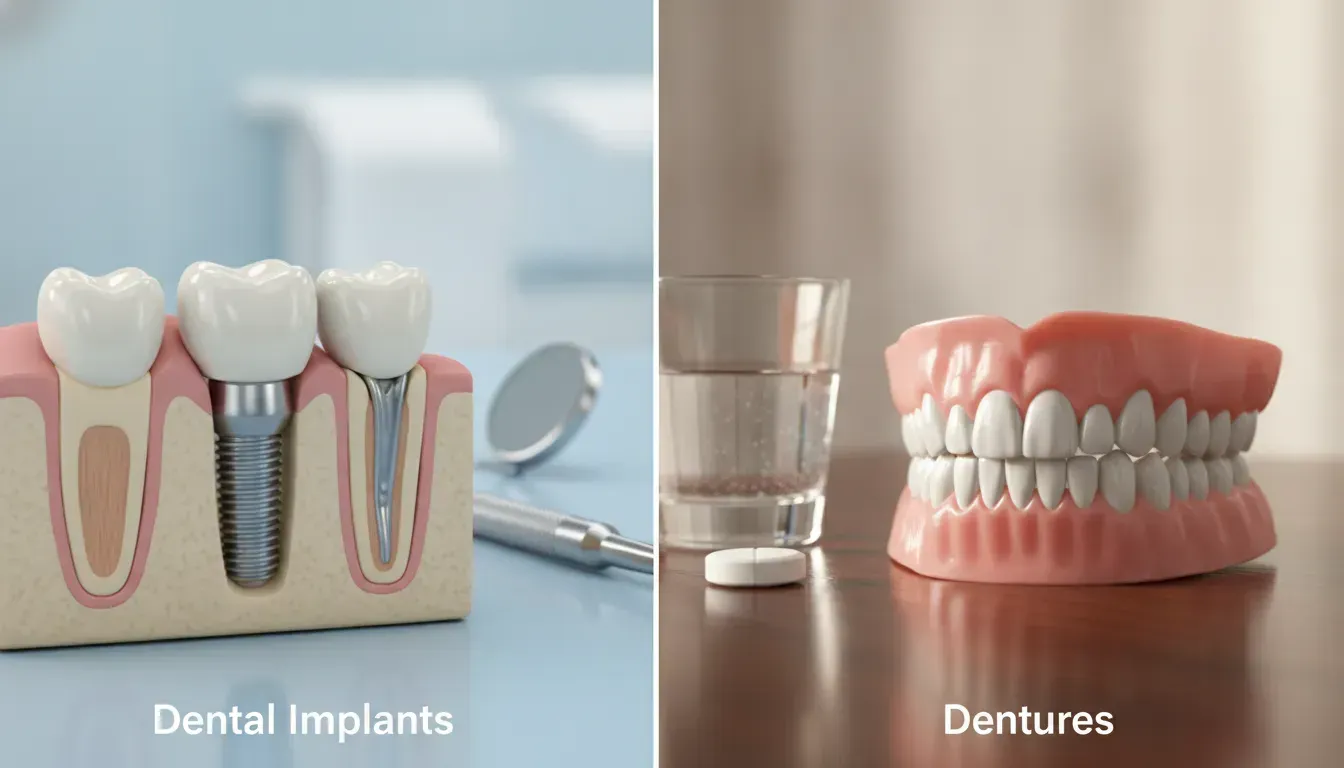
An implant-supported denture uses dental implants to help stabilize a removable denture. This approach may be considered when several or all teeth are missing. It can be discussed alongside traditional complete or partial dentures, especially when the patient's priorities include stability, cleaning, comfort, and ease of use.
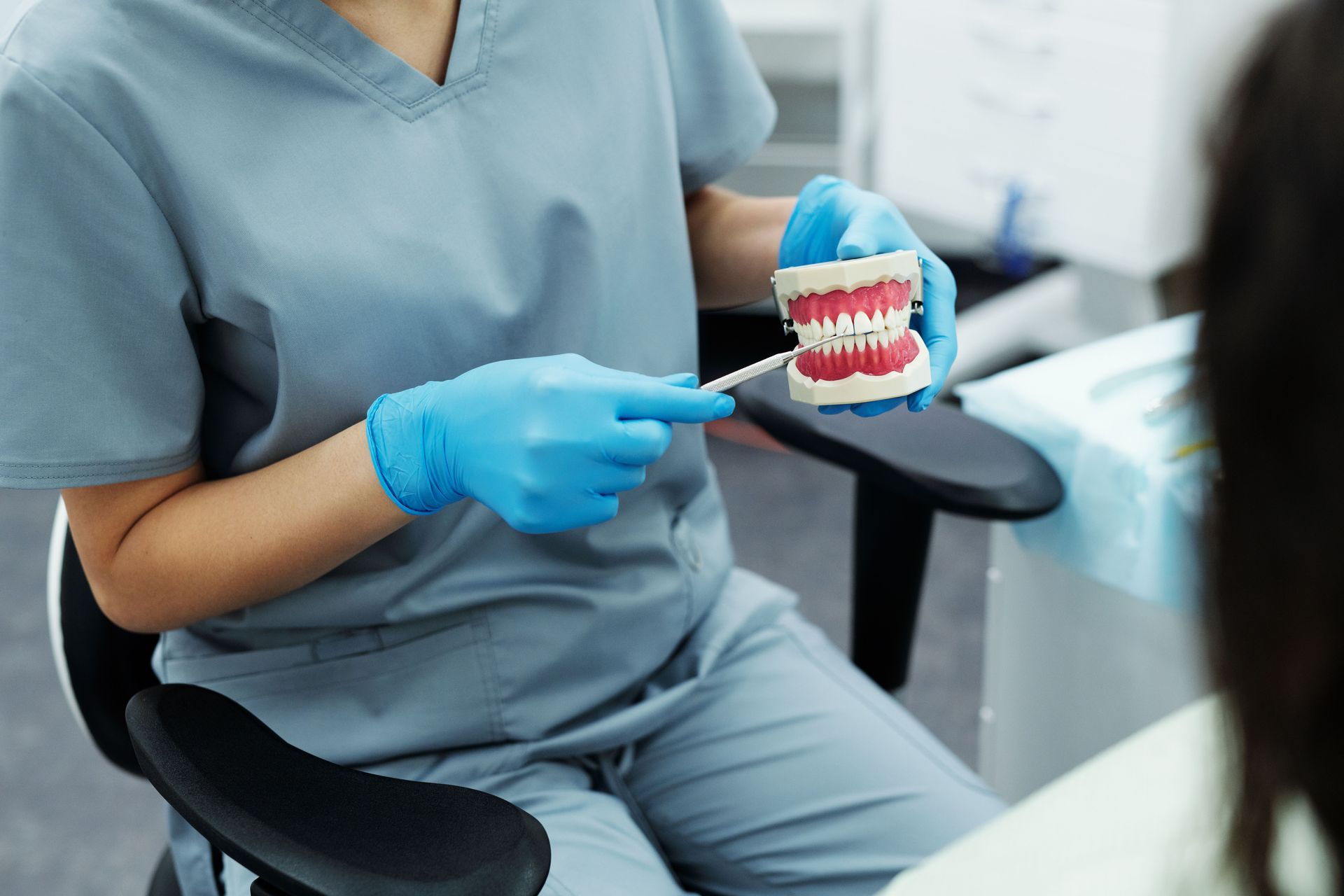
For a senior who already wears dentures, the discussion should include how the current appliance fits, how it is cleaned, whether it affects eating or speaking, and what the patient hopes to change. The best option is not the same for every person.
Full-mouth or full-arch treatment
When many teeth are missing or failing, a full-mouth or full-arch plan may be evaluated. These plans can involve several stages and may include extractions, temporary teeth, implants, and final restorations. The exact sequence depends on the examination and the patient's health and goals.
Have questions about single-tooth implants, implant-supported dentures, or full-mouth options? Contact Bain Dental & Aesthetics Group or call 770-832-9668 to discuss the next step.
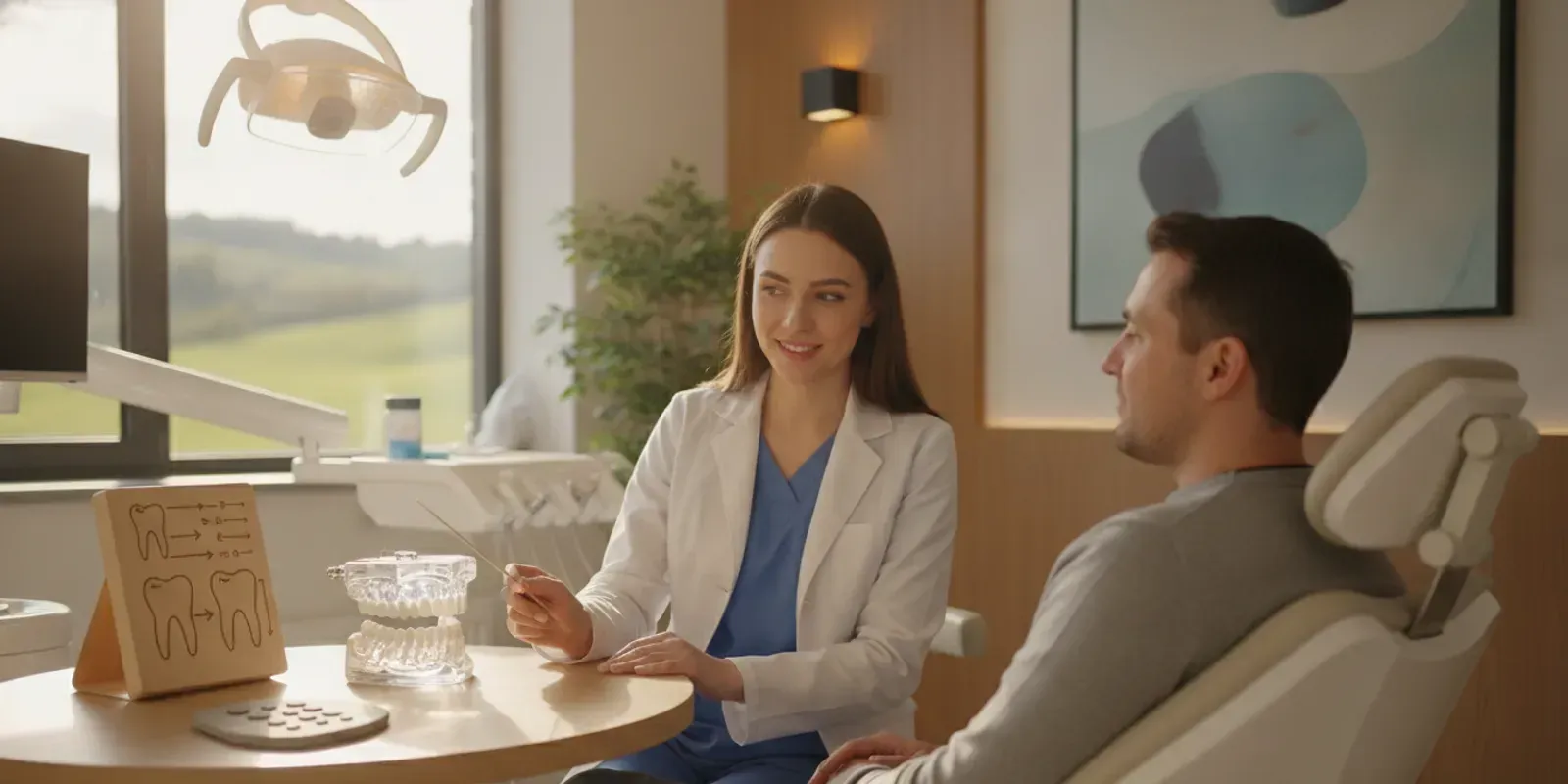
What happens during a senior dental implant evaluation?
A consultation is a chance to gather information and compare options. It is not a commitment to a procedure. A typical evaluation may include the following steps:
- Review your goals. Tell the dental team what you want to improve, such as chewing comfort, denture stability, appearance, speech, or replacing a tooth you recently lost.
- Discuss your health history. Share your medical conditions, medications, allergies, tobacco use, prior dental procedures, and any concerns about anesthesia or healing.
- Examine the mouth. The team may evaluate the teeth, gums, bite, existing restorations, jaw joints, and areas of missing teeth.
- Use appropriate imaging. Digital X-rays or 3D imaging may help evaluate bone and plan the position of an implant when implant treatment is being considered.
- Identify preparation needs. The plan may include gum therapy, an extraction, a temporary restoration, bone grafting, or treatment for another oral health concern before implant placement.
- Compare options. You should receive an explanation of the proposed restoration, alternatives, expected visits, home care, and follow-up needs.
The American Dental Association describes implant treatment as a process that can include placement, a healing period called osseointegration, and attachment of the replacement tooth or teeth. The length and sequence vary. Ask for an individualized explanation instead of relying on a general timeline found online.
What if dental implants are not the right fit?
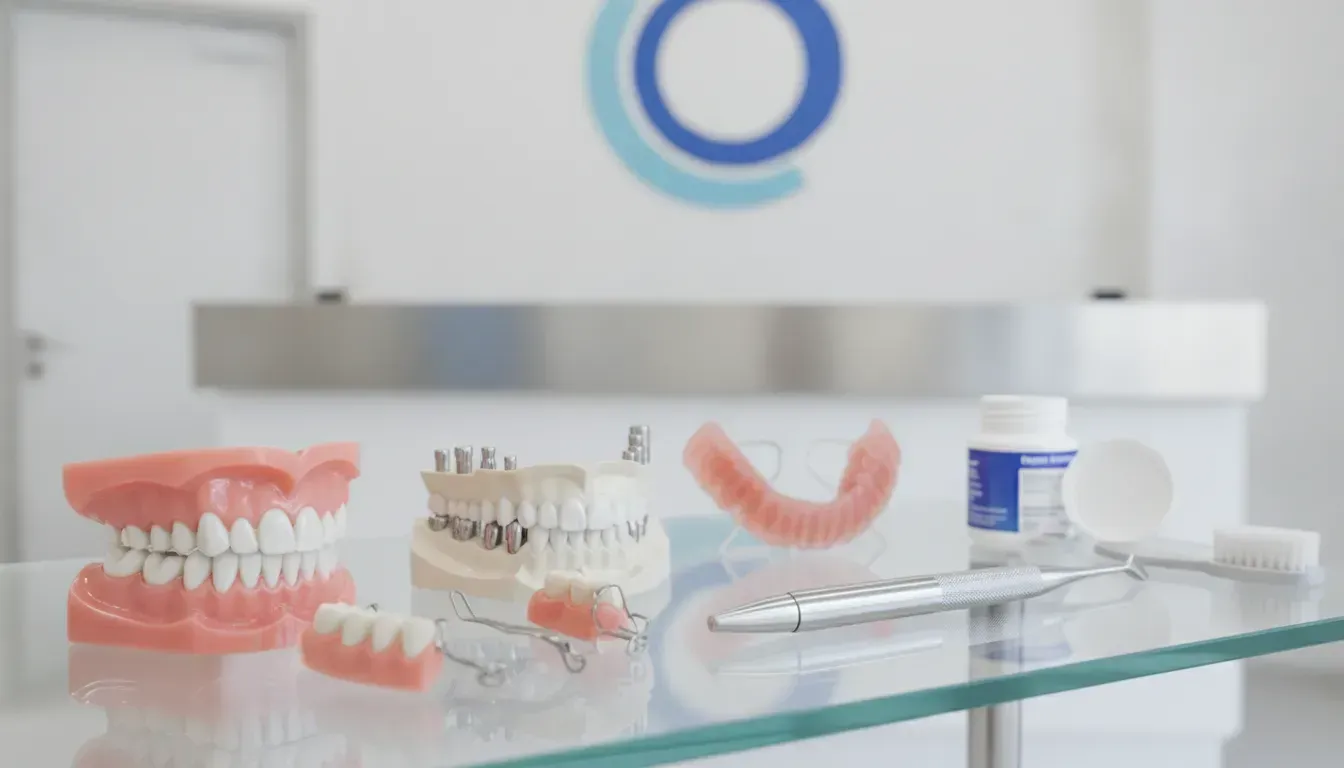
Implants are not the only way to replace missing teeth. Depending on the condition of the mouth and the patient's priorities, alternatives may include a fixed bridge, a partial denture, a complete denture, a crown-supported plan, or treatment to preserve a remaining natural tooth.
A non-implant option is not a failure. It may be the most practical choice when a patient wants a removable restoration, needs to limit surgery, has health factors that require a different approach, or prefers a plan with different maintenance needs. A good consultation should explain the tradeoffs clearly, including cleaning, stability, follow-up, and how the option fits the patient's daily routine.
Bain Dental & Aesthetics Group serves patients in Bowdon, Carrollton, Villa Rica, and nearby West Georgia communities. The practice also offers a dental savings plan and financing options, but eligibility, terms, and availability should be confirmed directly with the practice. Ask about the choices available for your specific plan rather than assuming a benefit or approval.
Questions seniors should ask before choosing an implant plan
- What is causing my tooth loss or denture problem?
- Can any of my remaining teeth be preserved?
- Do I have enough bone for the proposed implant, or would preparation be needed?
- How could my health conditions or medications affect treatment and healing?
- Which restoration is being recommended, and what alternatives should I compare?
- How will I clean the restoration at home?
- How many visits are expected, and what follow-up care will be needed?
- What should I bring to the consultation, including medication and medical-provider information?
- Which financial or savings-plan questions should I review with the practice team?
Frequently asked questions about dental implants for seniors
Can a 75-year-old get dental implants?
Possibly. A person's age by itself does not determine candidacy. The dental team will consider oral health, bone support, overall health, healing factors, daily care, and the patient's goals before recommending implants or another option.
Can seniors get implants if they have bone loss?
Some people with bone loss may still be evaluated for implant treatment. Depending on the area and the amount of available bone, the plan may include bone grafting or another preparation step. Imaging and an in-person exam are needed to understand what is appropriate.
Are dental implants better than dentures for older adults?
Neither option is universally better. Implants and dentures have different requirements for surgery, cleaning, stability, maintenance, and follow-up. The right comparison depends on the patient's health, bone, goals, budget, and comfort with removable or fixed restorations.
How long does the dental implant process take for seniors?
The process varies. Preparation, healing, the number of missing teeth, and the type of restoration can all affect the sequence. Ask the dental team for a personalized treatment timeline after the evaluation rather than relying on a general estimate.
What should I bring to an implant consultation?
Bring a current medication list, relevant medical history, information about previous dental treatment, and a list of your goals and concerns. If a family member or caregiver helps with transportation or home care, you may want to include them in the conversation.
Take the next step with a personalized evaluation
Dental implants for seniors can be worth discussing when missing teeth, loose dentures, or a failing tooth affect comfort and daily life. Age is only one part of the picture. A careful evaluation can help you understand candidacy, preparation needs, implant-supported options, and alternatives without pressure.
Contact Bain Dental & Aesthetics Group at 770-832-9668 to learn more about dental implants for seniors, or fill out the official contact form to request a consultation in the West Georgia area.
This article is for general education and is not a diagnosis or individualized medical recommendation. A dentist or oral and maxillofacial surgeon can evaluate your health and oral condition and discuss appropriate options.