What Does a Pediatric Dentist Do? A Parent’s Guide
A pediatric dentist cares for children’s teeth, gums, and jaws. Learn what to expect at visits and how to support your child’s oral health at home.
Many parents wonder whether their child really needs to see a pediatric dentist if there is no pain. The answer is yes. Dental problems can develop without obvious symptoms, and young children may not know how to describe sensitivity or discomfort. Routine visits help the dental team spot cavities, gum concerns, delayed tooth eruption, bite changes, and habits that may affect oral development. They also help children practice positive dental routines before more involved care becomes necessary. Bain Dental & Aesthetics Group welcomes families from Bowdon, Carrollton, Villa Rica, and nearby communities with a focus on comfort, prevention, and individualized attention.
Key Takeaways
What Does a Pediatric Dentist Do?
A pediatric dentist cares for children’s teeth, gums, jaws, and bites from infancy through the teenage years. Their role includes much more than treating cavities. They track how a child’s mouth develops, teach families practical habits, and identify concerns that could affect eating, speaking, sleep, or the position of permanent teeth.
Children’s dental needs change as they grow. An infant may need guidance about teething, bottles, or pacifiers. A school-age child may need help preventing cavities, treating a dental injury, or monitoring the arrival of permanent teeth. Regular appointments give the dental team an opportunity to address these changes early, before they become more uncomfortable or difficult to treat.
Dental visits also help children become familiar with oral care. A calm, age-appropriate appointment can make brushing, cleanings, and future treatment feel more manageable. When families choose a practice that offers personalized, comfort-focused care, children can build positive associations with the dentist over time. Bain Dental & Aesthetics Group provides family dental services in Bowdon, Carrollton, and Villa Rica, so parents can keep care convenient as their children grow.
Care for developing teeth, gums, jaws, and bites
Pediatric dentists understand how children’s mouths develop. During an exam, they check the teeth and gums for cavities, inflammation, discoloration, and other concerns. They also watch how the jaws grow, how teeth erupt, and whether the upper and lower teeth fit together properly.
These visits can reveal concerns parents may not notice, including crowded teeth, delayed eruption, crossbites, or signs that a child may eventually need orthodontic care. The Cleveland Clinic explains that pediatric dentists care for children’s teeth, gums, and jaws from infancy through adolescence.
Compare pediatric and general dentists
General dentists treat patients across a broad range of ages, while pediatric dentists complete additional education focused on infants, children, and teenagers. After dental school, pediatric dentists typically complete two to three years of specialized training, according to the Cleveland Clinic’s overview of pediatric dentistry.
This training covers child development, behavior guidance, developing teeth, dental injuries, growth patterns, and care for children who need additional support. A general dentist may also provide excellent care for children, especially older children and teens. The best fit depends on your child’s age, comfort level, dental needs, and the services offered by the practice.
Help children feel comfortable during visits
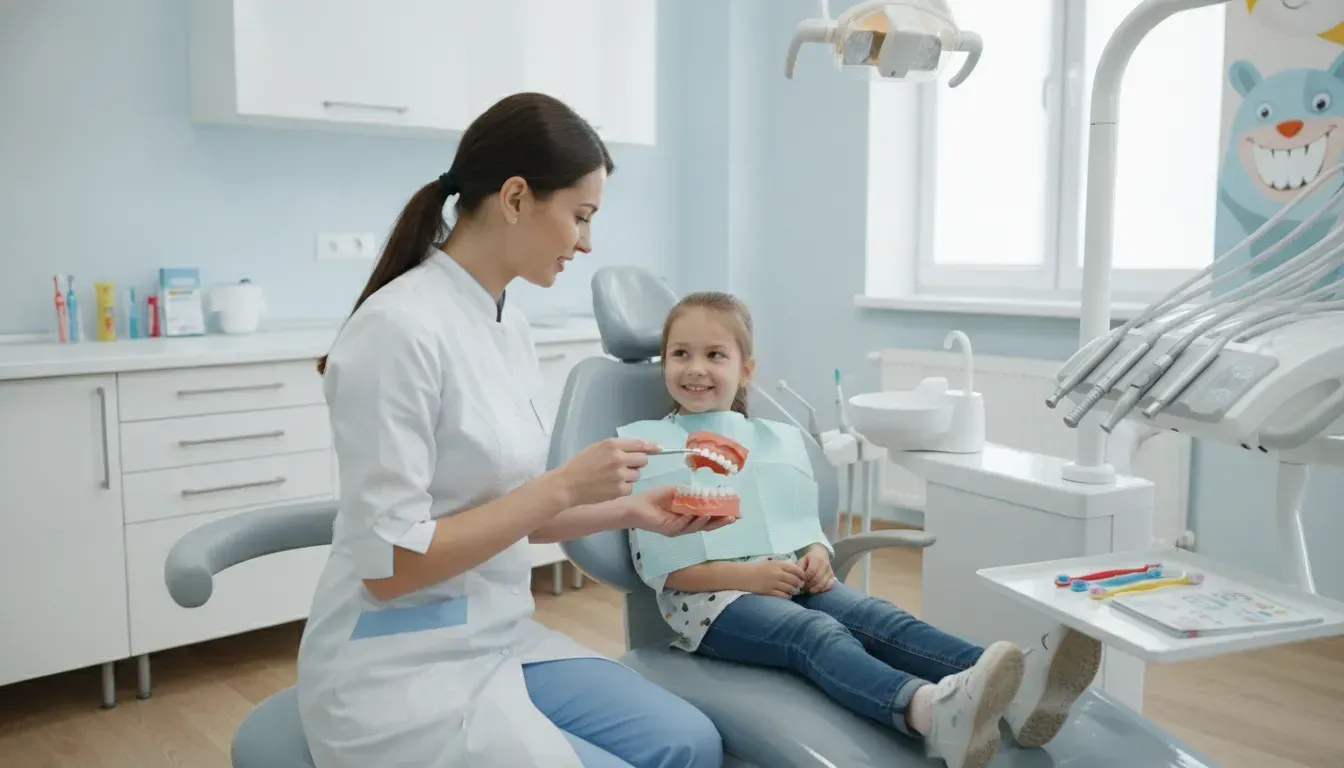
Child-friendly dental offices often use bright colors, books, toys, puzzles, and simple explanations to make appointments feel less intimidating. Dental teams may explain each step before treatment and use language that matches the child’s age. These small details can help children understand what to expect.
Parents can support a positive experience by staying calm and avoiding words that may create fear, such as “pain” or “shot.” Let the dental team explain procedures in a clear, reassuring way. If your child feels nervous, mention it when scheduling the appointment so the team can allow extra time and plan appropriate support.
A positive visit does not require a child to sit perfectly still or enjoy every part of the appointment. Patience, encouragement, and praise for small steps can help children feel more comfortable during future visits.
Protect baby teeth and prevent dental problems
Baby teeth help children chew, speak clearly, and hold space for permanent teeth. Some primary teeth remain in place until age 12 or 13, so they need consistent care. Untreated decay can lead to pain, infection, difficulty eating, and complications for developing adult teeth.
Depending on a child’s risk of tooth decay, a dentist may recommend cleanings, fluoride treatments, sealants, fillings, or other care. At home, parents can help by brushing twice daily with fluoride toothpaste, cleaning between teeth when they touch, and offering water between meals and at bedtime.
Preventive care also includes checking for injuries, discussing thumb-sucking or pacifier habits, and reviewing snacks and drinks. The American Dental Association explains why baby teeth matter, even though they eventually make way for permanent teeth.
Correct common misconceptions about children’s dental care
One common misconception is that children should wait to see a dentist until all their baby teeth have erupted. The first visit should occur by age one or within six months of the first tooth appearing. Early appointments help parents learn how to care for a child’s mouth and give the dental team an opportunity to identify concerns sooner.
Another misconception is that children only need dental care when something hurts. Cavities may develop without obvious symptoms, and young children may not know how to describe sensitivity or discomfort. Regular checkups can identify problems before they cause pain or require more involved treatment.
Some parents also assume baby teeth do not need treatment because they eventually fall out. Healthy primary teeth support eating, speech, comfort, and proper spacing for permanent teeth. If you have questions about your child’s oral health, Bain Dental & Aesthetics Group can help you explore dental services for your family in a comfortable, family-focused setting.
When Should Your Child See a Pediatric Dentist?
Your child’s dental care should begin before there is a problem. Early visits help the dentist monitor developing teeth, gums, jaws, and bites while giving you practical advice about brushing, fluoride, feeding, pacifiers, and thumb-sucking. They also help children become familiar with the dental office, which can make future appointments feel more routine.
Parents in Bowdon, Carrollton, Villa Rica, and nearby communities can speak with a family-focused dental team about their child’s oral health needs. Even if your child has only one tooth, an early checkup can support healthy habits and identify concerns before they cause discomfort.
Schedule the first visit by age one or within six months of the first tooth
The American Academy of Pediatric Dentistry recommends scheduling a child’s first dental visit by their first birthday or within six months after the first tooth appears. This may seem early, but baby teeth can develop cavities soon after they erupt. The first appointment allows the dentist to examine your child’s teeth, gums, jaws, bite, and oral tissues.
It is also an opportunity to ask questions about brushing, fluoride toothpaste, bottles, snacks, pacifiers, and thumb-sucking. If your child is older and has not visited a dentist yet, schedule an appointment without worry. The recommended timing for a child’s first dental visit can serve as a helpful guide.
Know what to expect at the first appointment
A first dental visit often lasts about 30 to 45 minutes, though the exact length depends on your child’s age, comfort level, and needs. The dentist may gently examine the teeth, gums, jaws, bite, and other oral tissues. For babies and toddlers, the exam may happen while your child sits in your lap.
The appointment usually focuses on prevention and guidance rather than extensive treatment. The dental team may explain how to clean your child’s teeth, recommend an appropriate amount of fluoride toothpaste, and discuss eating and drinking habits. Stanford Medicine Children’s Health outlines the first visit so parents know what to expect.
Schedule regular dental checkups
After the first visit, most children should see the dentist every six months. Regular checkups allow the dental team to monitor baby teeth as they erupt, watch for cavities, and track the transition to permanent teeth. These visits may include a cleaning, fluoride treatment, cavity screening, and guidance tailored to your child’s age.
Some children may need more frequent appointments because of previous cavities, enamel concerns, orthodontic changes, special healthcare needs, or habits that affect the bite. Your dentist can recommend an appointment schedule based on your child’s oral health. WVU Dental recommends visits every six months, or at least once a year.
Recognize signs that require an earlier visit
Do not wait for a routine appointment if your child develops tooth pain, sensitivity, swelling, or difficulty chewing. Tooth discoloration, bleeding gums, persistent mouth odor, or a change in eating and sleeping habits may also point to a dental concern.
Mouth breathing can sometimes relate to congestion, enlarged tissues, or other conditions that affect oral development and sleep. Contact your dental office promptly after a chipped, loosened, or knocked-out tooth, especially if your child has facial swelling or significant pain. These early signs that a child may need dental care can help you decide when to call.
Prepare your child for a positive dental experience
Children often take emotional cues from their parents, so use calm, simple language when discussing the dentist. Explain that the dental team will look at and clean their teeth, but avoid words that may create fear. Let your child bring a comfort item, and schedule the visit when they are rested and unlikely to feel rushed.
Reading a children’s book about dental care or playing pretend dentist at home can make the appointment feel familiar. Avoid promising that the visit will not hurt, since appointments vary. Instead, reassure your child that you will be nearby and that the dental team will explain each step. A welcoming office and child-friendly behavior guidance can help children feel more comfortable.
What Services Does a Pediatric Dentist Provide?
Pediatric dentists care for children’s teeth, gums, jaws, and bites as they develop. Their services range from preventive exams and cleanings to cavity treatment, emergency care, and guidance for habits that may affect a child’s smile. They also help parents understand how to protect baby teeth while preparing for healthy permanent teeth.
Some family dental practices provide children’s care, while other cases may require a pediatric dental specialist or another dental professional. Bain Dental & Aesthetics Group offers comprehensive dental services for families in Bowdon, Carrollton, Villa Rica, and surrounding communities. The dental team can recommend care based on your child’s age, oral health, development, and comfort.
Perform exams, cleanings, fluoride treatments, and sealants
A child’s dental exam allows the dentist to check the teeth, gums, bite, jaw development, and oral habits. The dentist may look for cavities, enamel weakness, gum irritation, crowding, or delayed tooth eruption. Regular visits also help children become familiar with the dental office before they need more involved treatment.
Professional cleanings remove plaque and buildup that brushing may miss. Depending on a child’s needs, the dentist may apply fluoride to strengthen enamel and recommend sealants for the grooves in back teeth. These areas can trap food and bacteria, making them harder to clean. The American Dental Association explains how dental sealants help prevent cavities.
Prevent cavities in baby and permanent teeth
Cavity prevention is a major part of pediatric dental care. Baby teeth help children chew, speak, and maintain space for permanent teeth, so they need attention even though they eventually fall out. Untreated decay can cause pain, infection, trouble eating, and problems with sleep or school.
A dentist may recommend fluoride treatments, sealants, brushing changes, dietary adjustments, or more frequent visits based on a child’s cavity risk. At home, parents can help by brushing their child’s teeth twice a day with fluoride toothpaste, supervising brushing, and limiting frequent sugary snacks and drinks. The Centers for Disease Control and Prevention provides children’s oral health guidance.
Treat teeth with fillings, crowns, pulp therapy, and extractions
When a child develops a cavity, the dentist can remove the damaged portion of the tooth and place a filling. A baby tooth with extensive decay or significant weakness may need a crown to protect the remaining tooth structure. Restoring the tooth can help relieve discomfort and allow the child to eat and speak normally.
If decay or an injury reaches the tooth’s inner pulp, pulp therapy may help preserve the tooth and control infection. An extraction may be recommended when a tooth is severely damaged, infected, or interfering with normal development. The dentist will explain the reason for treatment and discuss ways to keep the visit comfortable. Bain Dental & Aesthetics Group provides restorative care through its general dental services.
Monitor tooth eruption, jaw growth, and bite development
Children’s smiles change quickly, so dentists monitor how teeth emerge and how the jaws grow. During regular visits, they may assess the spacing and position of teeth, the relationship between the upper and lower jaws, and the way the bite comes together.
This monitoring can identify concerns such as significant crowding, a crossbite, an open bite, delayed eruption, or extra teeth. Early observation does not always mean a child needs immediate orthodontic treatment. Often, the dentist will simply track development and recommend a referral when the timing is appropriate. The American Academy of Pediatric Dentistry discusses developing dentition and occlusion.
Address thumb-sucking, pacifier use, and other oral habits
Thumb-sucking and pacifier use are common during infancy and early childhood. However, frequent or prolonged habits may affect the position of the front teeth, the shape of the palate, or the way the jaws meet. A dentist can evaluate the habit based on your child’s age, frequency, and stage of dental development.
Support should be calm and encouraging rather than critical. A dentist may suggest positive reinforcement, gentle reminders, or a gradual plan for reducing the habit. If the habit has already affected the bite, the dental team can monitor changes and discuss whether orthodontic guidance may help. The American Academy of Pediatric Dentistry offers recommendations about non-nutritive sucking habits.
Use space maintainers and provide early orthodontic guidance
When a baby tooth is lost too early, nearby teeth may drift into the open space. This can leave less room for the permanent tooth to erupt properly. In some cases, a dentist may recommend a space maintainer, an appliance that holds the area open until the permanent tooth is ready to come in.
A dentist may also assess crowding, crossbites, jaw relationships, and oral habits that could affect future alignment. Early orthodontic guidance does not always involve braces. It may involve monitoring, a referral to an orthodontist, or treatment at the appropriate stage of development. Bain Dental & Aesthetics Group offers orthodontic treatment options, including traditional braces and clear aligners.
Treat tooth pain, dental injuries, and emergencies
Children may need urgent dental care after a fall, sports injury, chipped tooth, severe toothache, swelling, or suspected infection. A dentist can evaluate the problem, relieve discomfort, protect the tooth, and determine whether additional treatment is necessary. Even an injury that looks minor can affect the inside of a tooth, so call the dental office for advice.
If a permanent tooth is knocked out, pick it up by the crown rather than the root. Avoid scrubbing it or letting it dry out, and seek dental care immediately. Severe swelling, uncontrolled bleeding, trouble breathing, or a serious facial injury requires emergency medical attention. Bain Dental & Aesthetics Group provides emergency dental care for patients who need prompt attention.
Support anxious children and children with special healthcare needs
Children may feel nervous about unfamiliar sounds, sensations, or past dental experiences. A child-focused dental team can use simple explanations, short visits, breaks, positive reinforcement, and a tell-show-do approach to make appointments feel more manageable. Parents can help by using calm, matter-of-fact language and avoiding scary descriptions of dental treatment.
Children with special healthcare needs may benefit from additional planning, modified appointment times, or coordination with medical providers. Before the visit, share information about your child’s health history, medications, sensory sensitivities, communication style, and previous dental experiences. Bain Dental & Aesthetics Group’s dental team takes a personalized, comfort-focused approach at its Bowdon, Carrollton, and Villa Rica locations.
What Training Does a Pediatric Dentist Complete?
Pediatric dentists receive specialized training to care for infants, children, and teenagers while their teeth, jaws, and emotional needs continue to develop. Their education prepares them to provide preventive care, treat dental injuries, monitor growing smiles, and support children with medical or developmental conditions.
This training also helps pediatric dentists adjust their communication and treatment methods for each child. A toddler may need a short, simple appointment, while an older child may need guidance for orthodontic concerns or a dental emergency. Pediatric dentists learn how to recognize these differences and create age-appropriate care plans. The American Academy of Pediatric Dentistry offers additional information about children’s oral health, dental development, and preventive care.
Complete dental school and a pediatric residency
Pediatric dentists first complete four years of dental school, just like other dentists. After earning a dental degree, they complete an additional two to three years of specialized pediatric residency training, according to the Cleveland Clinic.
During residency, dentists receive supervised experience caring for infants, children, and teenagers. Their education may cover infant oral health, cavity prevention, fillings, dental emergencies, pulp therapy, extractions, sedation, hospital-based care, and treatment for children with complex medical needs.
This additional education gives pediatric dentists a detailed understanding of how children’s mouths develop. It also teaches them how to recognize concerns early, protect primary teeth, and decide when a child may benefit from another dental or medical specialist.
Learn child development and behavior guidance
Pediatric dentists study more than teeth and gums. Their training may include child psychology, growth and development, communication techniques, and ways to ease dental anxiety. These skills help them explain procedures in language children understand and adjust appointments according to a child’s age, personality, and comfort level.
Behavior guidance may involve positive reinforcement, distraction, short explanations, scheduled breaks, or a gradual introduction to dental instruments. Pediatric dentists may also learn how to care for children with sensory sensitivities, developmental differences, or special healthcare needs.
The Cleveland Clinic explains that pediatric dental training includes techniques for helping children feel more comfortable during treatment. A calm, supportive approach can help children build trust and develop positive habits that continue into adulthood.
Treat developing teeth, jaws, dental trauma, and special care needs
Children’s dental concerns can change quickly because their teeth, jaws, and bites are still developing. Pediatric dentists learn how to monitor tooth eruption, evaluate jaw growth, identify early bite concerns, and protect primary teeth and permanent teeth.
Their training also covers dental trauma, including chipped, loosened, displaced, or knocked-out teeth. Prompt evaluation can help protect the surrounding tissues and guide treatment when an injury affects a developing permanent tooth. Parents should contact a dental office promptly after a significant injury, especially if their child has pain, bleeding, swelling, or a tooth that has moved.
Pediatric dentists also learn how to modify care for children with special healthcare needs. Treatment may require additional planning, shorter visits, specific communication methods, or coordination with a physician. This background helps the dental team provide care that is safe, respectful, and suited to each child.
Maintain specialty certification, state licensure, and continuing education
After dental school and pediatric residency, dentists must meet the licensing requirements in the state where they practice. They also maintain their professional credentials and complete continuing education throughout their careers.
Some pediatric dentists pursue board certification through the American Board of Pediatric Dentistry. This process includes education and examination requirements that demonstrate advanced knowledge in pediatric dental care. Board certification is not the only way to evaluate a dentist, so parents can also ask about residency training, clinical experience, emergency care, and treatment for children with special needs.
Continuing education helps pediatric dentists stay current with changes in preventive care, dental materials, behavior guidance, sedation safety, emergency treatment, and infection control. Ongoing learning is important because children can have very different dental, medical, and emotional needs.
Coordinate care with general dentists, orthodontists, and oral surgeons
Pediatric dentists often coordinate care with other dental professionals. A child may need a general dentist for ongoing family care, an orthodontist for bite correction, or an oral surgeon for complex extractions, impacted teeth, or jaw-related treatment.
Good communication between providers helps each professional understand a child’s dental history, medical needs, treatment goals, and stage of development. It also gives parents clearer guidance about referrals, next steps, and follow-up appointments. The Kool Koala Pediatric & Adolescent Dentistry team explains that pediatric dentists may work closely with general dentists, orthodontists, and oral surgeons to support comprehensive care.
Families in Bowdon, Carrollton, Villa Rica, and surrounding communities can also seek coordinated treatment from a practice with a broad range of dental services. Bain Dental & Aesthetics Group includes general dentists and a board-certified oral and maxillofacial surgeon, allowing the team to support many dental needs through comprehensive dental care.
How Can Parents Protect Children’s Oral Health at Home?
Healthy habits at home give children a strong foundation for healthy teeth and more comfortable dental visits. A consistent routine does not need to be complicated. Children benefit most when brushing, flossing, balanced food choices, and regular checkups become normal parts of the day.
Parents also play an important role in noticing changes that children may not explain clearly. Tooth pain, sensitivity, swelling, discoloration, or bleeding gums can indicate a problem that needs professional attention. Calling the dental office early is often better than waiting for symptoms to become more severe.
Children learn by watching the adults around them, so try to make oral care feel calm and predictable. Let your child choose a toothbrush, brush alongside them, and use simple language to explain why dental care matters. Supervision is especially important during the early years, when children may not have the coordination to clean every tooth thoroughly.
A family dental practice can support these habits with preventive care, guidance, and treatment when concerns arise. Bain Dental & Aesthetics Group serves families in Bowdon, Carrollton, Villa Rica, and surrounding communities with comfort-focused dental care. The following steps can help protect your child’s smile between visits.
Brush twice daily with the right amount of fluoride toothpaste
Children should brush twice a day, once in the morning and again before bed. Use a soft-bristled toothbrush and fluoride toothpaste. Children younger than three generally need only a smear about the size of a grain of rice. Children ages three and older can use a pea-sized amount. An adult should supervise brushing and remind the child to spit instead of swallowing the toothpaste.
Young children often need help cleaning the back teeth, gumline, and inside surfaces. Let your child brush first, then take a turn to finish the job. Replace the toothbrush when the bristles become worn. The American Dental Association’s guidance on toothbrushes offers additional tips for choosing and using one.
Floss when two teeth touch
Begin flossing as soon as two of your child’s teeth touch. A toothbrush cannot clean the narrow space between them, where food particles and plaque can collect. Cleaning between the teeth each day helps lower the risk of cavities and supports healthier gums.
Parents usually need to floss for young children because the technique requires coordination. As your child gets older, teach them to guide the floss gently between the teeth, curve it around each tooth, and move it up and down without snapping it into the gums. Floss picks may be easier for some children to hold. Ask your dental team to demonstrate the best method during a routine visit.
Limit sugar, sticky snacks, and acidic drinks
The frequency of sugar exposure matters as much as the total amount. When children eat or drink something sugary, bacteria in the mouth can produce acids that weaken enamel. Frequent snacking gives teeth less time between acid exposures.
Try to reserve sweets for occasional treats instead of offering them throughout the day. Fruit snacks, caramel, and gummy candy can cling to teeth, while soda, sports drinks, and fruit drinks may contribute to enamel wear and cavities. Offer balanced meals and snacks when possible. Cheese, plain yogurt, fresh vegetables, and whole fruit are options that are generally kinder to teeth than sticky or highly processed snacks.
Offer water between meals and at bedtime
Water is a simple choice between meals and before bed. It can help rinse away food particles and dilute acids left after eating. Fluoridated tap water may also provide regular exposure to fluoride, which helps strengthen tooth enamel.
Avoid putting your child to bed with a bottle or sippy cup filled with milk, juice, or another sweet drink. Teeth can remain exposed to those sugars for hours while a child sleeps. If your child wants a drink at bedtime, plain water is the safest choice for their teeth. Encourage water after snacks, physical activity, and foods that tend to stick to the mouth.
Protect teeth during sports and discourage harmful oral habits
A properly fitted mouthguard can help protect the teeth, lips, cheeks, and jaw during contact sports or activities where falls and collisions are possible. Ask your dentist whether a custom mouthguard is appropriate, particularly if your child wears braces or has experienced a dental injury.
Pay attention to habits that may affect oral development, including thumb sucking, finger sucking, and prolonged pacifier use. These habits can influence tooth position or the shape of the palate in some children. Avoid shaming your child. Use calm reminders and ask the dental team about age-appropriate strategies. The Cleveland Clinic’s pediatric dentist guide explains how dental professionals support developing smiles and address oral habits.
Watch for pain, sensitivity, discoloration, swelling, and bleeding gums
Children may not always describe dental symptoms clearly, so watch for changes in their behavior and mouth. Pain while eating, sensitivity to hot or cold foods, a dark spot on a tooth, facial swelling, persistent bad breath, or bleeding gums can signal a problem that needs attention.
Call your dental office promptly if your child has severe tooth pain, swelling, a knocked-out permanent tooth, a broken tooth, or a mouth injury. If swelling affects breathing or swallowing, seek emergency medical care. For less urgent concerns, contacting the dental team is better than waiting for the next scheduled appointment. Early evaluation may prevent a small issue from becoming more uncomfortable.
Use calm, positive language about dental visits
Children often take their cues from their parents. Describe dental appointments in a simple, reassuring way without sharing frightening stories or using words that may create worry. You might say that the dentist will count the teeth, check the smile, and help keep the mouth healthy.
Avoid promising that a visit will not hurt, since you cannot predict every part of an appointment. Instead, explain that the dental team will describe what is happening and that your child can ask questions. Let your child bring a familiar toy or comfort item if the office allows it. Reading a children’s book about dental visits can also make the experience feel more familiar.
Keep checkups, fluoride treatments, and sealants on schedule
Routine dental visits allow the team to monitor cavities, gum health, tooth eruption, jaw growth, and bite development. They also give parents an opportunity to ask about brushing, flossing, nutrition, and habits such as thumb sucking.
A dentist may recommend fluoride treatments based on your child’s individual needs. Dental sealants can protect the grooves on the chewing surfaces of back teeth, where food and plaque can be difficult to remove. Sealants do not replace brushing and flossing, but they can provide added protection against cavities. The American Academy of Pediatric Dentistry’s parent resources provide additional information about preventive care and children’s dental visits.
Find family-focused dental care in Bowdon, Carrollton, and Villa Rica
A familiar dental office can make it easier for families to keep appointments and address concerns early. When choosing a practice, ask whether the team treats children, how it supports nervous patients, and which preventive services are available. Convenient locations and appointment options can also make regular care more manageable for busy families.
Bain Dental & Aesthetics Group serves patients in Bowdon, Carrollton, and Villa Rica. Parents can speak with the team about their child’s age, dental history, comfort needs, and reason for visiting before scheduling an appointment.
Choose Bain Dental & Aesthetics Group for comfortable visits, emergency care, savings-plan options, and flexible financing
Children benefit from dental care that feels respectful, organized, and suited to their individual needs. Bain Dental & Aesthetics Group provides comprehensive dental services, including preventive care and treatment for urgent concerns. Parents can contact the team about tooth pain, injuries, sensitivity, or other changes and ask what type of appointment their child may need.
The practice also offers an in-house dental savings plan and flexible financing options for eligible services. These options can help families plan for routine visits and seek care when a child needs attention. To learn more about the dentists and support team, visit Bain Dental & Aesthetics Group’s team page.
Frequently Asked Questions
When should my child first visit the dentist? Schedule your child’s first dental visit by age one or within six months after the first tooth appears. Early visits help the dental team check development and give you guidance on brushing, fluoride, feeding, pacifiers, and thumb-sucking.
How often should children have dental checkups? Most children benefit from dental visits every six months. Some may need more frequent appointments because of cavities, enamel concerns, orthodontic changes, medical conditions, or other individual needs.
Does my child need a pediatric dentist? A pediatric dentist has additional training focused on children’s dental development and behavior guidance. Some general dentists also provide excellent care for children. The right choice depends on your child’s age, comfort level, dental needs, and the services available at the practice.
What should I do if my child has a dental injury or severe tooth pain? Contact the dental office promptly if your child has a chipped, loose, displaced, or knocked-out tooth, significant pain, swelling, or trouble chewing. If swelling affects breathing or swallowing, seek emergency medical care. A knocked-out permanent tooth needs immediate dental attention.
How can I make dental visits easier for my child? Use calm, simple language and avoid frightening descriptions. Schedule visits when your child is rested, bring a comfort item if permitted, and let the dental team know about anxiety, sensory sensitivities, or previous difficult experiences. Bain Dental & Aesthetics Group offers family-focused dental care in Bowdon, Carrollton, and Villa Rica.