Root Canal Treatment vs Tooth Extraction: Which Is Right?
Find out how to choose between root canal treatment vs tooth extraction. Learn what each option involves, recovery tips, and how to decide with your dentist.
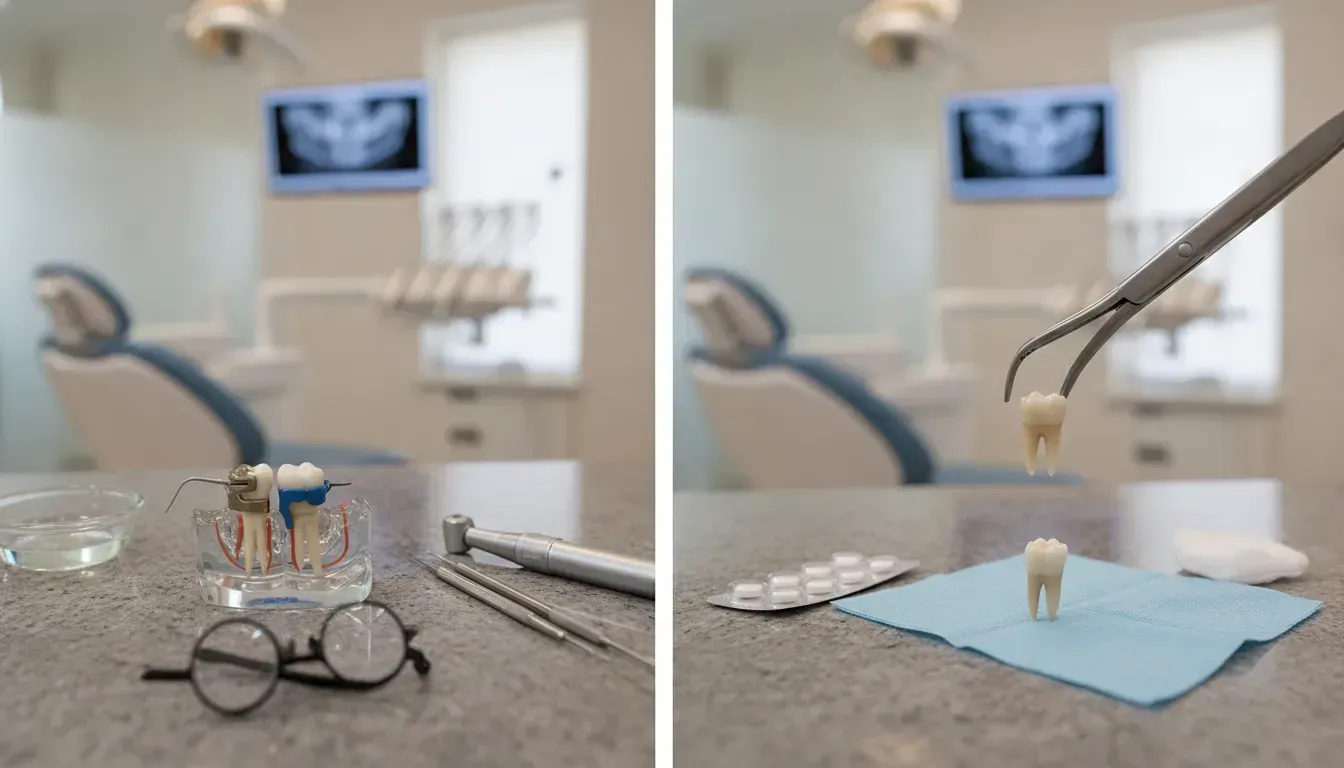
A damaged or infected tooth does not always need to come out. In some cases, a root canal can treat the problem inside the tooth and preserve it. In others, the damage may be too extensive, and extraction may be the more appropriate option. Your dentist will consider more than your symptoms, including how much healthy tooth remains and the condition of the surrounding bone and gums. Understanding root canal treatment vs tooth extraction can help you prepare for that conversation. We’ll explain what each procedure involves, what recovery may look like, and how crowns or tooth replacement can affect the full treatment plan.
Key Takeaways
- Let the tooth’s condition guide the choice: An exam and imaging help your dentist determine whether a root canal can preserve the tooth or extraction is the better option.
- Compare the complete care plan: Ask about crowns, tooth replacement, recovery, and total costs, along with available savings plan or financing options.
- Get help promptly for concerning symptoms: Contact a dentist about ongoing pain, swelling, or signs of infection, and seek emergency medical care for trouble breathing or swallowing.
Root Canal or Extraction: When Can Treatment Save a Tooth?
A painful or infected tooth may still be treatable without removing it. If enough healthy tooth structure remains and the roots are stable, a root canal may clear infection inside the tooth and help preserve it. Extraction may be recommended when damage is too extensive for the tooth to be restored, or when other factors make saving it unlikely to succeed.
Pain alone does not determine which treatment is right. Your dentist will assess the tooth, the extent of infection or damage, and your overall oral health. An exam and dental images can help show what is happening inside the tooth and around its roots. Your preferences and the care needed after treatment also play a role.
Try not to put off an evaluation if you have ongoing tooth pain or swelling. The American Association of Endodontists’ guidance on root canal myths explains that delaying treatment can reduce the chance of saving a tooth. Your dentist can discuss whether a root canal is an option, whether the tooth may need a crown, and what extraction could involve. Bain Dental & Aesthetics Group provides dental care in Bowdon, Carrollton, and Villa Rica.
What Do Infection and Inflammation Mean?
The soft tissue inside a tooth is called the pulp. It contains nerves and blood vessels, and it can become inflamed or infected when deep decay, a crack, or an injury lets bacteria reach it. Possible signs include lingering sensitivity to hot or cold, pain when chewing, swelling, or a change in the tooth’s color. Some infections cause few noticeable symptoms, so less pain does not always mean the problem has cleared.
A dentist will examine the tooth and nearby tissues to assess the pulp and determine whether the tooth can be restored. In some cases, infection can spread beyond the root and cause an abscess. Contact a dental office promptly about worsening pain or swelling. Facial swelling, fever, or difficulty swallowing or breathing requires urgent medical attention.
How Does a Dentist Clean and Seal the Tooth?
During root canal treatment, the dentist makes a small opening in the tooth and removes the infected or inflamed pulp. They clean and shape the canals inside the roots, then fill and seal them to help keep bacteria from entering again. The opening is closed with a filling or another restoration. Depending on how much healthy tooth structure remains, a crown may be recommended afterward.
The aim is to treat the infection while keeping the natural tooth in place. The procedure can vary based on the tooth and the extent of the damage. Before treatment, ask your dentist to walk you through the steps, including any follow-up restoration or referral you may need. This overview of root canal treatment explains how cleaning and sealing the tooth work.
What Does Treatment Feel Like?
It’s understandable to feel nervous about a root canal, especially if the tooth already hurts. Dentists typically use local anesthesia to numb the area, so you may feel pressure during treatment but should not feel sharp pain. Each person’s experience is different. Let your dentist know about your symptoms, concerns, or past experiences so they can talk through comfort options before starting.
Treatment may take one or more visits, depending on the tooth and the infection. Some tenderness afterward is common and usually improves as the area heals. Follow your dentist’s care instructions, and contact the office if pain gets worse or does not improve as expected. The AAE’s patient guide to root canal treatment answers common questions about the procedure.
Why Might the Tooth Need a Crown?
A crown may be recommended after a root canal if decay, a crack, or the treatment opening has left the tooth with less structure to withstand chewing. The crown covers and protects the remaining tooth. This is often a consideration for back teeth, which handle stronger chewing forces, but the right restoration depends on the tooth’s location and condition.
Your dentist can explain whether a filling or crown is suitable and when the final restoration should be placed. Until then, follow any instructions about chewing on that side. A tooth that needs a crown may be more vulnerable to breaking before it is fully restored. Completing the recommended restoration helps protect the tooth after treatment. You can explore Bain Dental & Aesthetics Group’s restorative dental services.
What Are the Benefits, Risks, and Misconceptions?
A root canal can preserve your natural tooth, helping you maintain normal chewing and avoid a gap. The AAE reports that root canal treatment has a high success rate, and a treated tooth can last for many years when it receives the right restoration and ongoing care. Still, no treatment guarantees a permanent result. Further care may be needed if infection remains, a new issue develops, or the restoration is damaged.
It’s also a misconception that extraction is always the simpler or less costly choice overall. Removing a tooth involves recovery, and you may want to discuss replacement options. Root canal treatment has limits, too: a severely fractured tooth or one with too little healthy structure may not be restorable. Ask your dentist to compare the likely benefits, risks, and next steps for your tooth. The AAE’s information on root canal myths offers more detail on treatment outcomes and preserving natural teeth.
Tooth Extraction: When Should a Dentist Remove a Tooth?
A dentist may recommend an extraction when a tooth cannot be restored or when keeping it could put your oral health at risk. Whenever possible, preserving a natural tooth may be considered through treatments such as a filling, crown, or root canal. But if damage is too extensive, removing the tooth may be the more appropriate way to address the problem.
Common reasons for extraction include severe decay, an infection that cannot be treated successfully, a fracture extending below the gumline, an impacted tooth, or advanced gum disease that has weakened the tooth’s support. A dentist may also recommend removal to address crowding or make space for orthodontic treatment. The decision depends on the tooth’s condition, its location, the health of the surrounding gums and bone, and your overall dental needs. Certain types of damage and disease can make extraction necessary.
An exam and, when needed, dental imaging help your dentist assess the tooth and explain your options. If removal is recommended, ask why the tooth cannot be restored, what the procedure involves, and whether you may need a replacement afterward. Planning ahead can help you understand the care, healing time, and costs involved. Bain Dental & Aesthetics Group offers extractions and restorative dental services, so the team can discuss possible next steps based on your needs.
When Can’t a Dentist Restore a Tooth?
A tooth may be too damaged to restore if decay has destroyed too much of its structure, a fracture extends below the gumline, or infection has caused damage that cannot be treated predictably. Advanced gum disease can also weaken the bone and tissues supporting a tooth, making it loose or difficult to preserve. In some cases, the tooth’s position or condition can make effective treatment especially challenging.
Pain alone does not determine whether a tooth can be saved. A painful tooth may still respond to treatment, while a tooth with few symptoms may have significant decay or other damage. Your dentist can assess the tooth with an exam and imaging, then explain whether options such as a filling, crown, or root canal are appropriate. Extraction may be considered when the tooth cannot be repaired or could put nearby teeth or gums at risk, as described in this overview of when a tooth may need removal.
What Are Simple and Surgical Extractions?
A simple extraction is generally used when the tooth is visible above the gumline and accessible. After numbing the area, the dentist loosens the tooth with dental instruments and removes it. This approach is often suitable for a tooth that is intact and can be reached without an incision.
A surgical extraction may be needed if a tooth is impacted, broken near the gumline, or difficult to remove because of its position or roots. The dentist or oral surgeon may make a small incision in the gum and, in some cases, remove a small amount of bone or divide the tooth into sections. Your exam and imaging help determine which approach is appropriate. Bain Dental & Aesthetics Group’s team includes general dentists and a board-certified oral and maxillofacial surgeon.
What Happens During an Extraction?
Before the procedure, your dentist will review your health history, explain the plan, and numb the area with local anesthetic. Depending on the tooth and the complexity of the procedure, your provider can discuss comfort options. You may feel pressure as the tooth is loosened, but let your dental team know if you feel pain or need a pause.
After removing the tooth, the dentist cleans the socket. Stitches may be placed, particularly after a surgical extraction, and gauze is usually applied to help control bleeding. Your provider will give you instructions for caring for the area as it heals, including how to protect the site. The steps can vary based on the tooth and the type of extraction. For a general explanation of the process, read about what happens during a tooth extraction.
What Are the Benefits and Risks?
Extraction can remove a source of infection or damage when the tooth cannot be treated successfully another way. It may also make room for orthodontic treatment or help protect nearby tissues from a compromised tooth. Some extractions can be completed in one visit, although complex cases may require additional planning or follow-up.
Removing a tooth also means losing the natural tooth, and the area needs time to heal. Soreness, swelling, and light bleeding can occur after the procedure. Less common complications include infection, prolonged bleeding, and dry socket, which can develop if the protective blood clot is lost too soon. Your dentist can explain your personal risks and how to care for the site during recovery. Discuss replacement options, too, since a gap may affect chewing, nearby teeth, or your bite. This overview of extraction’s benefits and drawbacks can help you prepare questions for your appointment.
How Can You Replace a Missing Tooth?
After an extraction, your dentist can discuss whether to replace the tooth and when to begin. Options may include a dental implant, a bridge, or a partial denture. The right choice depends on the tooth’s location, the health of nearby teeth and bone, your overall health, and your preferences. Depending on the treatment plan, replacement may be planned before the extraction or after the area has healed.
Leaving a gap can allow nearby teeth to shift over time and may affect your bite or chewing. The impact depends partly on which tooth was removed. An implant replaces the tooth root as well as the visible tooth; a bridge or partial denture fills the space using a different design. Ask your dentist how each option works, how long treatment may take, what care it requires, and what it may cost. You can also review these tooth replacement options after extraction and discuss which ones may suit your needs.
Root Canal vs. Extraction: How Do They Compare?
A root canal treats a tooth from the inside, while an extraction removes it. The better option depends on the tooth’s condition, whether it can be restored, and what care you may need afterward. Your dentist can compare the expected benefits, risks, recovery, and costs after examining the tooth and reviewing any necessary imaging.
Save the Natural Tooth or Remove It
A root canal aims to preserve your natural tooth. The dentist removes infected or inflamed pulp from inside it, cleans the space, and seals it to help prevent further infection. If the tooth has enough healthy structure to support a restoration, this may resolve the problem while keeping the tooth in place. Extraction may be recommended if the damage is too extensive to repair or the tooth is affecting nearby teeth or gums. The American Association of Endodontists’ patient guide explains how root canal treatment can help save a natural tooth. Ask your dentist what they see during your exam and why they recommend one option over the other.
Effects on Chewing, Nearby Teeth, Bite, and Jawbone
A natural tooth helps you chew and can help maintain the position of nearby teeth. After an extraction, neighboring teeth may shift into the open space, which can affect your bite. The jawbone in that area may also change over time. These effects vary, so ask your dentist how the location of the tooth and your oral health may affect you. If the tooth is removed, replacement with an implant or bridge may be an option to fill the gap and help restore function. Bain Dental & Aesthetics Group offers restorative dental services, and its team can discuss which choices may suit your needs. Consider both the immediate procedure and the care that may follow.
How Tooth Location and Damage Affect Treatment
Your dentist will consider the tooth’s location, how much healthy structure remains, and how far the damage extends. A tooth with enough solid structure may be suitable for a root canal and restoration. A fracture below the gum line, severe decay, or advanced gum disease may make a tooth difficult or impossible to restore. The tooth’s position can also affect the forces it handles when you bite and the type of restoration it may need. An exam and imaging help your dentist assess the roots, surrounding bone, and areas that aren’t visible on the surface. Ask what the findings mean for the expected outcome of each option, and whether additional treatment would be needed to protect or replace the tooth.
Compare Upfront and Long-Term Costs
An extraction may have a lower initial cost than a root canal, but the first procedure’s price does not tell the whole story. If you remove a tooth and later choose an implant or bridge, replacement treatment adds to the total. A root canal may also require a restoration, such as a crown, depending on the tooth and how much structure remains. Costs vary based on the tooth, the extent of the damage, and the treatment plan. Ask for an estimate that includes each step, follow-up visits, and any recommended restoration or replacement. Comparing the full plans can help you understand the likely costs over time, rather than choosing based only on the price of the first procedure.
How Insurance, Savings Plans, and Financing Affect Cost
Your out-of-pocket costs depend on your insurance coverage, plan limits, and the treatment your tooth needs. Before deciding, ask the dental office to review your benefits and provide an estimate for both options, including any crown, bridge, or implant that may be part of the plan. Bain Dental & Aesthetics Group offers an in-house Dental Savings Plan, described as an alternative to traditional insurance with no waiting periods or annual maximums. Flexible financing may also be available, depending on the treatment and eligibility. Ask which services the savings plan covers, what you would pay upfront, and whether financing applies to the entire plan. A clear cost breakdown can help you weigh your options with fewer surprises.
What Should You Expect During Recovery and Long-Term Care?
Recovery varies based on the procedure, the tooth’s condition, and your health. Your dentist will give you instructions for your situation, so follow those even if they differ from general advice. Keep follow-up appointments, and contact your dental team if symptoms concern you or do not improve as expected.
Protect the Tooth After a Root Canal
Mild tenderness around a treated tooth can last for a few days, particularly if it was painful or infected before treatment. Use pain relief only as directed by your dentist or the medication label. Until your permanent restoration is in place, avoid chewing hard or sticky foods on that side. A temporary filling or crown offers protection, but it may not be as durable as the final restoration.
A root canal cleans and seals the inside of the tooth to help stop infection and preserve the natural tooth. Depending on how much damage it has, the tooth may need a crown to restore strength and reduce the risk of fracture. Attend follow-up visits so your dentist can check the tooth and complete any recommended treatment. You can learn more about root canal care and other dental services at Bain Dental & Aesthetics Group.
Protect the Blood Clot After an Extraction
After an extraction, a blood clot forms in the socket and protects the area as it heals. If the clot is dislodged, dry socket can develop and cause significant pain. Follow your dentist’s directions for brushing, rinsing, and caring for the site. Avoid using a straw or smoking during the early healing period, since these actions can disturb the clot.
Some soreness and swelling are normal. Swelling may be most noticeable 24 to 48 hours after the procedure, while soreness after a simple extraction often improves over a few days. Surgical extractions may take longer to heal. Contact your dental team if pain gets worse rather than better, or if you are uncertain about your recovery. For more general guidance, read this guide to extraction recovery and dry socket.
Manage Food, Pain Relief, Hygiene, Smoking, and Activity
Start with soft foods and follow your dentist’s advice about when to return to your usual diet. After an extraction, avoid straws, smoking, and vigorous rinsing during the first 72 hours, unless your dentist gives you different instructions. These steps help protect the blood clot while the socket begins to heal.
Keep your mouth clean, but be gentle around a tender tooth or extraction site. Follow your dentist’s directions for brushing and rinsing, and take pain relief only as directed. Rest if you feel tired, and ask when you can return to strenuous activity. Recovery instructions may vary based on the procedure and your health, so call the office if you are unsure what to do. The Eagle Falls Dentistry aftercare guide also reviews general steps for managing food, hygiene, and activity.
Know Which Warning Signs to Report
Contact your dentist for severe or worsening pain, increasing swelling, persistent bleeding, fever, or drainage with an unpleasant taste or odor. After an extraction, pain that intensifies after initially easing may signal dry socket or another problem. After a root canal, call if a temporary filling or crown comes loose, your bite feels uneven, or symptoms return.
A broken tooth, facial swelling, extensive decay, or signs of infection also need prompt dental attention. Antibiotics alone may not address the source of an infected tooth, so follow your dentist’s advice about treatment. If you have trouble breathing or swallowing, seek emergency medical care. For other concerns, explain when your symptoms began and whether they are changing. Bain Dental & Aesthetics Group offers emergency dental care for urgent concerns.
Consider Each Option’s Long-Term Effects
A root canal can preserve your natural tooth and help maintain normal chewing and the position of nearby teeth. The tooth still needs regular brushing, flossing, and dental checkups. Your dentist may recommend a crown, depending on the tooth’s condition, to help protect it from breaking. With appropriate treatment and ongoing care, a successfully treated tooth may last for many years.
An extraction removes the tooth, but the space left behind may affect chewing or allow neighboring teeth to shift. Your dentist can explain whether replacing it with an implant, bridge, or another option makes sense for you. Replacement may involve additional treatment and cost, so ask about the full plan before making a decision. The American Association of Endodontists explains how preserving a natural tooth can support oral health. Discuss how each option may affect your bite and long-term care with your dentist.
How Do You Choose the Right Treatment?
The choice between a root canal and an extraction depends on the tooth’s condition, your overall health, and your priorities. An exam helps your dentist explain which treatments are possible, what each involves, and how recovery and costs may differ. Share your symptoms and concerns, and ask questions until you feel clear about the next step.
Why Do Exams and Imaging Matter?
Your dentist will examine the tooth and may take X-rays to check its roots, surrounding bone, and the extent of decay or infection. Imaging can reveal issues that are hard to see during a visual exam and help show whether the tooth has enough healthy structure to support a root canal and restoration.
The tooth’s location, previous dental work, medical history, and medications may also factor into the recommendation. A thorough assessment helps your dentist explain the likely risks, treatment steps, and aftercare. Gardner Wade DDS describes how an exam can help determine whether a tooth may be saved. Bring up any pain, sensitivity, swelling, or changes you have noticed, even if they seem minor.
What Should You Ask About Benefits, Risks, Recovery, and Cost?
Ask why your dentist recommends a root canal or extraction, what the procedure involves, and whether you may need a crown or tooth replacement. You can also ask about pain control, expected recovery, follow-up visits, and symptoms that should prompt a call to the office.
When comparing costs, ask for an estimate that includes related care, not just the procedure. A root canal may require a separate restoration, while an extraction may involve replacement treatment. Insurance coverage, savings plans, and financing can also affect your out-of-pocket cost. The decision may depend on the tooth’s condition, restorability, location, your health, and long-term expenses, as Smile Lake Anna explains. A written treatment plan can help you compare options.
Why Might Extraction Require More Treatment?
An extraction may be the right choice when a tooth cannot be restored. After removal, however, you and your dentist may need to discuss whether to replace it with an implant, bridge, or denture. Replacement can help restore chewing function and fill the space left by the tooth.
The best approach depends on which tooth is removed, your oral health, and your preferences. Ask whether replacement is recommended, when it could happen, and how it would affect your treatment plan and total cost. Leaving a gap can allow nearby teeth to shift and may affect your bite, so it is worth discussing the possible effects before making a decision. Gardner Wade DDS outlines why tooth replacement may be part of the conversation after an extraction.
Discuss Your Options With Bain Dental & Aesthetics Group in Bowdon, Carrollton, or Villa Rica
An in-person exam can help you understand whether a root canal, extraction, or another treatment is appropriate for your tooth. Bain Dental & Aesthetics Group offers a range of dental services at its offices in Bowdon, Carrollton, and Villa Rica. Your care team can review your concerns, explain possible treatments, and discuss recovery and costs.
Contact a dental professional promptly for severe pain, facial swelling, a broken tooth, or signs of infection. When scheduling, describe your symptoms and ask how to care for the tooth before your visit. You can also ask the Bain Dental & Aesthetics Group team about its in-house dental savings plan and flexible financing, so you know which payment options may be available.
Frequently Asked Questions
How does a dentist decide between a root canal and an extraction? Your dentist checks how much healthy tooth structure remains, whether the roots and surrounding tissues are stable, and how extensive the damage is. An exam and dental images can help determine whether the tooth can be restored and which option is more likely to work.
Can a tooth that doesn’t hurt still need treatment? Yes. Some dental infections or decay cause few symptoms at first. Changes in color, swelling, sensitivity, or discomfort when chewing are worth discussing with a dentist, even if the pain is mild or has faded.
Will I need a crown after a root canal? Possibly. A crown may be recommended if the tooth has lost enough structure that it needs extra protection when you chew. Your dentist can explain whether a crown or another restoration is appropriate and when it should be placed.
If my tooth is extracted, do I have to replace it? Not always, but your dentist may discuss an implant, bridge, or denture. Whether replacement makes sense depends on the tooth’s location, your bite, oral health, and preferences. Ask about timing and costs as part of the treatment plan.
When should I seek urgent care for tooth pain or swelling? Contact a dental office promptly about worsening pain, swelling, a broken tooth, or signs of infection. Facial swelling, fever, or difficulty swallowing or breathing needs urgent medical attention.