Dental Bridges vs Implants: Which Is Right for You?
Compare dental bridges vs implants to find out which tooth replacement fits your needs, budget, and lifestyle. Learn pros, cons, costs, and care tips.
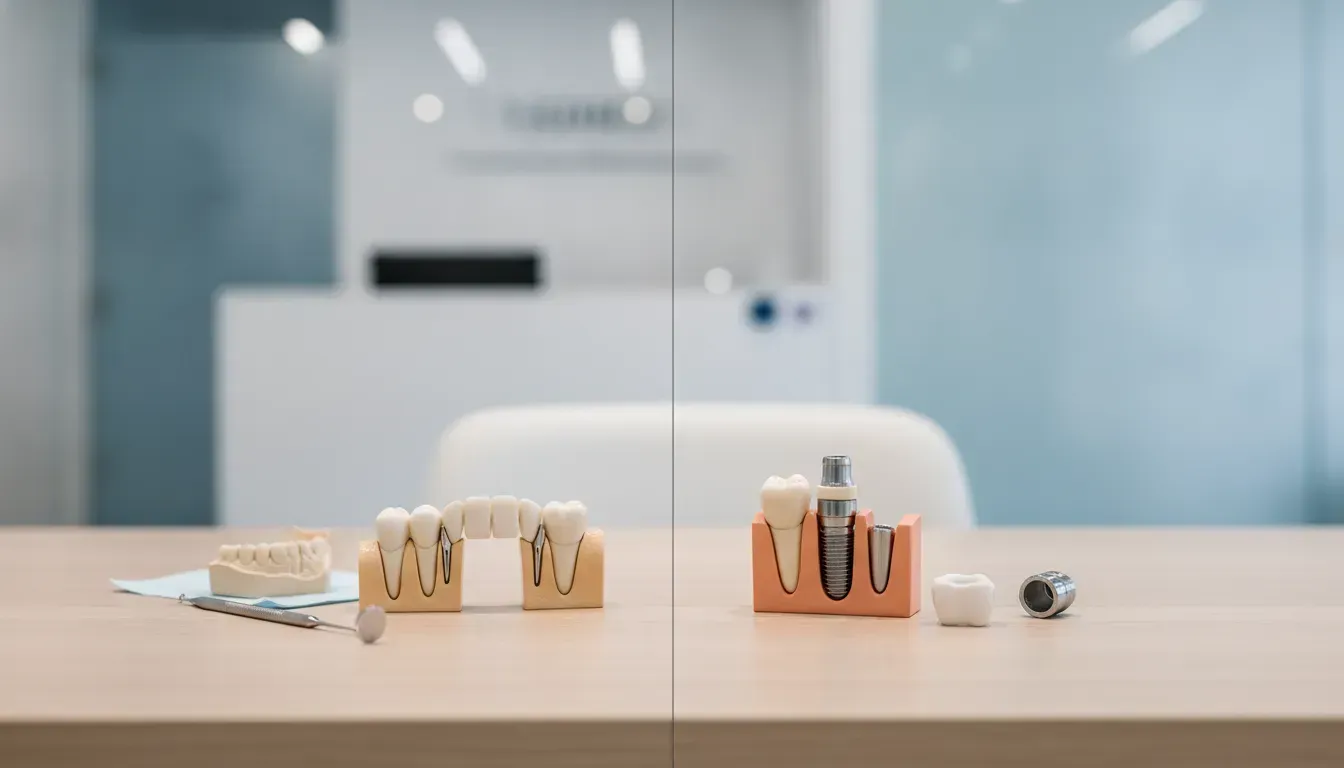
A missing tooth doesn’t have to leave you guessing about what comes next. Dental bridges vs implants are two common ways to replace a tooth, but they work differently and may suit different needs. A bridge is held by crowns on neighboring teeth. An implant is placed in the jawbone and supports a custom replacement tooth. The right choice depends on more than appearance: your dentist will assess your gums, bone, bite, nearby teeth, health, and preferences. Bain Dental & Aesthetics Group offers both treatments, along with flexible financing and an in-house dental savings plan. A personalized exam can help you understand care, timing, and costs.
Key Takeaways
- A bridge and an implant rely on different support: A bridge uses neighboring teeth, while an implant is anchored in the jawbone. Your exam can clarify which option fits your oral health.
- Weigh the complete plan and cost: Ask about treatment steps, healing time, upkeep, possible repairs, insurance, and any added procedures.
- Bring your priorities to the consultation: Share your preferences and budget, then ask about candidacy and payment options at Bain Dental & Aesthetics Group in Bowdon, Carrollton, or Villa Rica.
How Do Dental Bridges and Implants Compare?
A dental bridge and an implant can both replace a missing tooth, but they use different kinds of support. A bridge attaches an artificial tooth to crowns placed on neighboring teeth. An implant uses a post in the jawbone to support a replacement tooth. The right option depends on factors such as the health of your gums, the condition of nearby teeth, your treatment preferences, and your budget. A dentist can examine your mouth and explain which approaches may fit your needs. Bain Dental & Aesthetics Group offers bridges and dental implants as part of its restorative care.
How Does a Bridge Replace a Missing Tooth?
A traditional bridge fills the space left by a missing tooth with an artificial tooth, called a pontic. Crowns on the teeth beside the gap hold the pontic in place. To prepare those supporting teeth for crowns, the dentist reshapes them, then takes impressions or digital scans to guide the bridge’s design. The finished bridge is fitted and secured to restore the gap.
A bridge does not replace the missing tooth’s root. It relies on neighboring teeth for support, so your dentist will check their condition and your gum health before recommending one. A bridge may be worth discussing if the nearby teeth already need crowns or if an implant is not a suitable choice. The Cleveland Clinic’s comparison of bridges and implants explains how the two treatments differ.
How Does a Dentist Place and Restore an Implant?
A dental implant replaces a tooth root with a small post, usually made of titanium, placed in the jawbone. After the post is placed, the bone needs time to bond with it. Once healing is sufficient, the dentist attaches a connector called an abutment and a custom crown to restore the visible tooth.
Before treatment, your dentist evaluates your gums, jawbone, and overall health to determine whether an implant may be appropriate. Some patients need additional care, such as a bone graft, before placement. The steps and healing time vary, so ask your dentist what your treatment plan may involve. The Cleveland Clinic’s guide outlines the implant process and how it compares with a bridge.
What Are the Treatment Steps, Timeline, and Recovery?
A bridge is often completed in two or three visits over a few weeks. The dentist prepares the supporting teeth, takes impressions or scans, and may fit a temporary bridge while a dental lab makes the permanent one. At a follow-up visit, the dentist checks the fit and bite before securing it. You may have temporary sensitivity or soreness after tooth preparation.
Implant treatment usually takes longer because the jawbone needs time to heal around the post before the final crown can be attached. The full process may take up to six months, though your timeline depends on your health, healing, and whether you need additional procedures. Follow your dentist’s aftercare guidance, and ask what to expect after each visit. The Cleveland Clinic’s treatment overview provides more detail on typical timelines.
How Much Do Bridges and Implants Cost?
The cost of replacing a missing tooth depends on your oral health, the treatment plan, and your insurance. A bridge may cost less upfront, while an implant may require additional procedures. Comparing the initial estimate with potential repair or replacement costs over time can help you decide what fits your needs and budget.
What Are the Upfront and Long-Term Costs?
A dental bridge typically costs between $2,000 and $5,000, while a single dental implant generally ranges from $3,000 to $6,000. These are broad estimates, not a quote for your care. The final price depends on factors such as the materials used, the number of teeth being replaced, and any preparatory treatment.
It’s also worth considering how long each option may last. Bridges often need replacement after 7 to 15 years, while implants may last 20 to 30 years or longer with proper care. If a bridge needs to be replaced more than once, its lifetime cost may approach or exceed an implant’s initial cost. See this comparison of implant and bridge costs for more context.
How Can Insurance, Financing, and Savings Plans Help?
Dental insurance may cover part of a bridge or implant, but benefits vary by plan. Some policies are more likely to contribute toward a bridge than an implant. Your coverage may also depend on annual limits, waiting periods, and your plan’s rules for the procedure. Ask your insurer for a benefits estimate, then review it with your dental office before treatment. The Cleveland Clinic’s guide to bridges and implants explains why coverage can differ.
If you’re concerned about out-of-pocket costs, ask about payment options while discussing your treatment plan. Bain Dental & Aesthetics Group offers flexible financing and an in-house dental savings plan. The team can explain available options and help you review an estimate for your recommended care. Explore the practice’s dental services and ask which payment options may apply.
What Affects Your Treatment Estimate?
An implant estimate may include more than the implant itself. If you need a bone graft or other care before placement, those procedures can add to the total. The complexity of your case, the materials selected, and your oral health also affect the treatment plan and cost. Your dentist can assess your jawbone and discuss any steps needed before placement.
A bridge estimate may depend on the number of teeth involved, the materials used, and the condition of the neighboring teeth that support it. Those teeth are reshaped to hold the bridge, so decay or damage may require additional care later. Your dentist will consider your gums, nearby teeth, and overall oral health when recommending an option. This overview of factors that affect treatment costs can help you prepare questions for your visit.
What Are the Pros, Cons, and Lifespans of Bridges and Implants?
Bridges and implants can both replace a missing tooth, restore chewing function, and help complete your smile. The best choice depends on your oral health, the condition of nearby teeth, your treatment preferences, and how much time you can allow for care. A bridge is often completed without implant surgery and may be a good option when the teeth next to the gap already need crowns. An implant replaces the missing tooth’s root and can support a crown without relying on neighboring teeth.
It also helps to consider what care each option may need over time. A bridge requires extra cleaning beneath its replacement tooth and may need repair or replacement as it wears. An implant needs regular brushing, cleaning between teeth, and dental checkups. The implant itself may last for decades, while its crown can eventually need attention.
These comparisons offer a starting point, but they cannot determine which treatment is right for you. Your dentist can assess your teeth, gums, bite, and jawbone, then discuss the benefits and limitations of each option for your situation.
How Long Do They Last, and What Repairs or Replacements Might They Need?
A dental bridge often lasts around 7 to 15 years, although some last longer with good care. It may need repair or replacement if it chips, loosens, or if one of the supporting teeth develops decay or gum problems. Regular dental visits allow your dentist to check the bridge and the teeth beneath it.
Implants can last 20 to 30 years or longer, and the implant may last a lifetime. The crown attached to it can wear down, chip, or need replacement before the implant does. How long either option lasts depends on factors such as oral hygiene, bite pressure, overall health, and routine dental care. Redding Dentist’s comparison of bridges and implants provides general lifespan estimates and outlines common trade-offs.
How Do They Look, Feel, and Function?
A dentist can design a bridge or implant crown to match the shape and shade of your surrounding teeth. Both options can look natural, and most people can speak and eat comfortably once they have adjusted. Your result will depend on the position of the missing tooth, your bite, and the health of the surrounding tissues.
An implant is secured in the jawbone, while a bridge is held in place by teeth on either side of the gap. That difference can affect how each option feels and functions for you. The crown on either restoration may need attention over time, so appearance and comfort are worth discussing alongside durability. The Cleveland Clinic’s guide to bridges and implants explains how the treatments compare.
How Do They Affect Nearby Teeth and Jawbone Health?
A traditional bridge is supported by teeth next to the gap. Those teeth are usually reshaped to hold crowns, even if they are otherwise healthy. This can make a bridge a practical choice, but it also means permanently changing the supporting teeth. Their health matters over time because decay or damage can affect the bridge.
An implant replaces the missing tooth root and does not require crowns on neighboring teeth. Because it transfers chewing forces to the jaw, it can help limit bone loss in the area. An implant does not prevent every change to your mouth, and it requires enough healthy bone and gum tissue for successful placement. The Cleveland Clinic’s overview describes these differences and why a dental exam is important before choosing a treatment.
How Do You Clean and Maintain Them, and What Complications Can Occur?
Care for an implant by brushing twice a day, cleaning between your teeth, and attending regular dental checkups. An implant cannot develop a cavity, but the gum and bone around it can become inflamed or infected. Daily cleaning helps protect these tissues and gives your dentist a chance to monitor the implant.
A bridge also needs daily brushing and cleaning between teeth. Food and plaque can collect beneath the artificial tooth, so your dentist may recommend a floss threader or another tool to reach the area. Bridges can loosen or break, while implant treatment involves surgery and carries risks such as infection or failure to integrate with the jawbone. The Cleveland Clinic’s information on treatment risks can help you prepare questions for your dental team.
What Should You Know About Pain, Permanence, and Age?
A bridge usually does not require implant surgery, though reshaping the supporting teeth may cause temporary sensitivity. Implant placement is oral surgery. Your dental team can explain anesthesia, recovery, and possible risks, including infection, nerve injury, or sinus complications, depending on the implant’s location.
An implant is designed as a long-term replacement, but it does not guarantee you will never need further care. The crown may need repair or replacement, and the surrounding gums and bone need ongoing attention. Implants may not be suitable for people whose jaws are still growing, often those under 18. For adults, age alone does not determine candidacy. Your overall health, jawbone, gums, and treatment goals all matter. Bain Dental & Aesthetics Group offers dental services that include implant care, and its team can discuss options based on your needs.
How Do You Choose Between a Bridge and an Implant?
Choosing between a dental bridge and an implant starts with a dental exam. Your dentist will look at the space, the teeth beside it, your gums, and the jawbone beneath the gap. Your overall health and preferences matter, too. You may want to avoid surgery, keep treatment within a certain budget, or preserve healthy neighboring teeth.
A bridge and an implant replace a missing tooth in different ways. A bridge rests on supporting teeth beside the gap, while an implant is placed in the jawbone. Each has benefits and limitations, and an exam helps determine which options may work for you. Bain Dental & Aesthetics Group offers dental services that include bridges and implants, giving you the chance to discuss both with your care team.
During your consultation, ask about the steps involved, expected timeline, costs, and care after treatment. Your dentist should explain why they recommend a particular option and whether another approach may be appropriate. It’s reasonable to take time to review the information and decide what feels right for you.
How Do Gum Health, Bone Density, and Nearby Teeth Affect Candidacy?
Healthy gums and adequate jawbone are important considerations when planning an implant. Tooth loss can lead to changes in the bone over time, so your dentist may use an exam and imaging to assess the area. If there isn’t enough bone to support an implant, ask whether additional treatment, such as bone grafting, may be an option. Your general health and ability to undergo surgery also factor into the decision.
A bridge may be worth discussing if the teeth beside the gap are healthy enough to support it. If those teeth already need crowns, your dentist can explain whether a bridge makes sense. Preparing a bridge generally involves reshaping the supporting teeth, while an implant stands independently. Read more about how implants and tooth bridges differ, then ask how your exam results affect your options.
How Should You Weigh Your Health Needs, Preferences, Timeline, and Budget?
Think about what matters most to you. An implant may appeal if you prefer a replacement that doesn’t rely on neighboring teeth and you’re comfortable with surgery and a potentially longer treatment process. A bridge may be an option if the adjacent teeth can support it or you’d rather avoid implant surgery. Treatment timelines vary, so ask your dentist what to expect in your specific case.
Compare more than the initial price. Ask about maintenance, possible repairs, and what your insurance may cover. You can also discuss financing or savings plans that may help make care more manageable. Your dentist can explain how your oral health, timeline, preferences, and budget relate to each treatment. This comparison of implants and bridges can help you prepare questions for your appointment.
What Should You Ask Your Dentist About Other Options?
Ask your dentist to explain the recommendation and how it applies to your situation. You might ask: Are my gums and jawbone healthy enough for an implant? Can the teeth beside the gap support a bridge? Would either option require additional treatment? What steps, recovery time, and follow-up visits should I expect?
It’s also useful to ask about cleaning, long-term maintenance, possible complications, and the full estimated cost. If you’re unsure about the recommendation, ask whether another option may be suitable and whether you can take time to consider your choices. Reviewing a guide to bridges and implants can help you organize your questions, but your dentist’s assessment is essential for a personalized plan.
How Can Bain Dental & Aesthetics Group Help You Explore Treatment?
Bain Dental & Aesthetics Group can evaluate the area, review your dental and health history, and discuss whether a bridge, implant, or another approach may suit your needs. The practice provides dental implant and bridge care, with a team that includes general dentists and a board-certified oral and maxillofacial surgeon.
Use your consultation to talk through comfort, treatment steps, timing, and costs. The team can also answer questions about the practice’s in-house dental savings plan and flexible financing options. Bain Dental & Aesthetics Group serves patients in Bowdon, Carrollton, Villa Rica, and nearby communities. You can learn more about the dental team before your visit, then bring a list of questions so you can make an informed decision.
How Can You Schedule a Consultation in Bowdon, Carrollton, or Villa Rica?
Contact the Bain Dental & Aesthetics Group office that’s most convenient for you to discuss replacing a missing tooth. The practice serves patients in Bowdon, Carrollton, and Villa Rica.
When you call or request an appointment, mention that you’re considering a bridge or implant. Let the team know if you have questions about comfort, treatment time, insurance, or cost so they can help you prepare. Bring a list of medications and questions, and share any changes to your health or dental history. At your appointment, your dentist can examine the area, explain which options may be appropriate, and outline possible next steps.
Related Articles
- Dental Implants vs. Bridges: Which Is Right for You?
- Pros and Cons of Single Tooth Implants vs. Bridges
- Dental Implants vs. Tooth Bridges: What’s the Difference?
- Dental Implants vs. Bridges: Which Option Is Best?
Frequently Asked Questions
Is a dental bridge or implant better for replacing a missing tooth?Neither option is best for everyone. A bridge relies on the teeth beside the gap, while an implant is supported by the jawbone. Your dentist can recommend an approach after checking your teeth, gums, bone, health, and preferences.
Can I get an implant if I have bone loss?Possibly. Your dentist will assess the bone where the implant would go and may discuss preparatory treatment, such as a bone graft, if needed. The exam and imaging help determine what options may be appropriate.
How long does it take to replace a tooth with a bridge or implant?A bridge is often completed over a few weeks. Implant treatment can take several months because the post needs time to heal in the jaw before the final crown is attached. Your individual timeline may vary.
How do I care for a bridge or implant?Brush twice daily, clean between your teeth, and keep up with dental checkups. A bridge needs careful cleaning beneath its replacement tooth. With an implant, keeping the surrounding gums healthy is important.
Where can I discuss bridge and implant options near Bowdon, Carrollton, or Villa Rica?Bain Dental & Aesthetics Group offers bridge and implant care at its locations in Bowdon, Carrollton, and Villa Rica. During a consultation, you can discuss treatment recommendations, timing, estimated costs, financing, and the in-house dental savings plan.